
You spot a sock hanging from your dog’s mouth, take one step forward, and watch them disappear behind the sofa. Suddenly, getting dressed has turned into a chase neither of you planned. For some dogs, running away keeps a brilliant game going; for others, it protects something they expect you to take. Dog trade training offers a different pattern: giving something up leads to something worthwhile, and your approach doesn’t automatically mean losing a prize.
Change the game before teaching the cue
The first change happens on your side of the exchange. Chasing, cornering, and reaching into your dog’s mouth can make your approach something to avoid, even if you’re only trying to rescue a slipper. For an ordinary, non-dangerous object, pause rather than advancing, soften your posture, and turn slightly sideways. Avoid repeatedly saying “drop it” while your dog runs away; you want those words to become a useful instruction, not background noise during a pursuit.
A little household management makes this much easier. Put laundry in a closed hamper, keep remote controls beyond reach, and use closed doors or suitable barriers around rooms you can’t supervise. Leave appropriate toys where your dog actually spends time, rather than keeping every chew in a basket across the house. The aim isn’t a perfectly tidy home—it’s fewer opportunities to practise the grab-and-run routine while a new habit develops.
Safety takes priority over any training plan. If your dog has a battery, medication, sharp object, or another potentially dangerous item, don’t turn the situation into a practice session or assume swallowing it will be harmless. Offer a compelling trade from a safe distance if possible, and contact a veterinarian promptly if ingestion may have occurred. If your dog freezes, stiffens, growls, or snaps around possessions, stop approaching and get help from a qualified reward-based trainer experienced in resource guarding; don’t punish the warning or test how close you can get.
Start with something your dog can easily surrender
Your first dog trade training session should be almost boring. Choose a quiet space and a safe toy your dog likes but isn’t intensely attached to, then have small, appealing treats ready before you begin. Don’t start with a stolen kitchen treasure or your dog’s favourite long-lasting chew. You’re setting up an easy exchange, not testing their resolve.
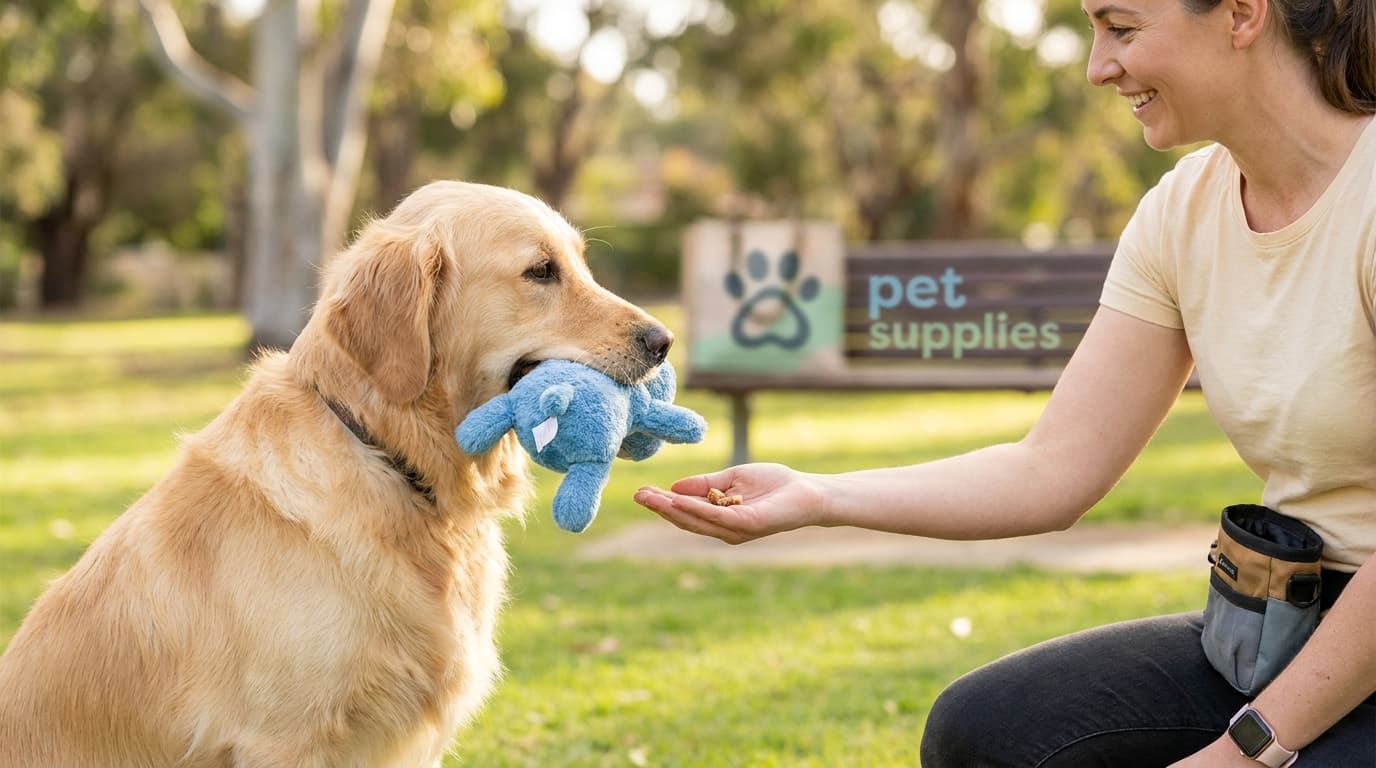
Let your dog hold the toy, then show a treat close enough for them to notice without pushing your hand toward their mouth. Stay still and give them time to decide. As their mouth opens and the toy falls, say a brief marker such as “yes,” then deliver the treat. If they keep holding on, don’t tug, pry, or repeat instructions; next time, choose a less exciting toy or a more appealing reward.
Once the toy is down, resist the urge to snatch it away. Let your dog eat, then pick it up calmly if they remain relaxed; if your reach makes them tense or rush back, leave it and make the next setup easier. When the toy is safe, offer it back for another short turn. That return matters: your dog learns that releasing an object doesn’t always end the fun, which can make the next exchange feel less risky.
Keep these early sessions short—just a few comfortable repetitions before moving on to something else. Two similar toys can also work if your dog genuinely enjoys swapping between them: bring the second toy to life, then resume play when the first is released. Avoid pulling on the toy they’re holding unless you’re deliberately playing an established tug game with clear rules. The useful lesson is voluntary release, not who can hold on longest.
Add the drop it cue, then make the skill portable
Wait until your dog is readily releasing the practice toy when the reward appears before adding words. Say your drop it cue once, just before presenting the treat, then mark and reward the release as before. After several easy successes across short sessions, try saying the cue and pausing briefly before showing the food. If your dog lets go, mark that moment and bring the reward out promptly from a pocket or nearby container.
This is where reward-based training starts moving beyond “I’ll only do it if I can see the snack.” You aren’t removing the payoff; you’re teaching your dog that the cue predicts an opportunity to earn it. If they don’t release, make the next repetition easier rather than repeating the cue more loudly. You may need a calmer setting, a less valuable object, or more practice with the treat still visible.
Change one part of the exercise at a time. Practise with another safe toy, then in another room, then with you sitting rather than standing. Don’t jump straight from a quiet living room to a dropped food wrapper on a busy walk. Keep rewards available as difficulty increases, and occasionally return safe objects so that trading continues to mean more than permanent confiscation.
Handle the real-life sock without restarting the chase
Eventually, your dog will acquire something you didn’t offer. If it’s a non-dangerous object and your dog looks relaxed, stop your approach and use the familiar cue from a comfortable distance. Reward the release, then guide your dog away with a few additional treats or another activity before calmly retrieving the item. You don’t need to win a race to the sock; you need enough space to collect it without restarting the game.
If the cue doesn’t work, treat that as information rather than defiance. The object may be more exciting than your practice toys, or your approach may still predict a struggle. For a relaxed dog, tossing a few appealing treats away from the object can create space to retrieve it once they’ve moved away. Avoid lunging as they turn, and if they stay over the object or show tension, back off and seek individual guidance rather than escalating the exchange.
There’s another pattern worth watching: stealing something, trading it, then immediately searching for the next item. Don’t withhold a promised reward, but tighten up access to tempting belongings and reward your dog for choosing their own toys, settling nearby, or leaving household objects alone. Dog trade training works best alongside those everyday habits, not as the only reliable way to get your attention. Keep a few rewards handy, practise easy swaps, and make your next approach less like the start of a chase and more like an offer worth considering.