
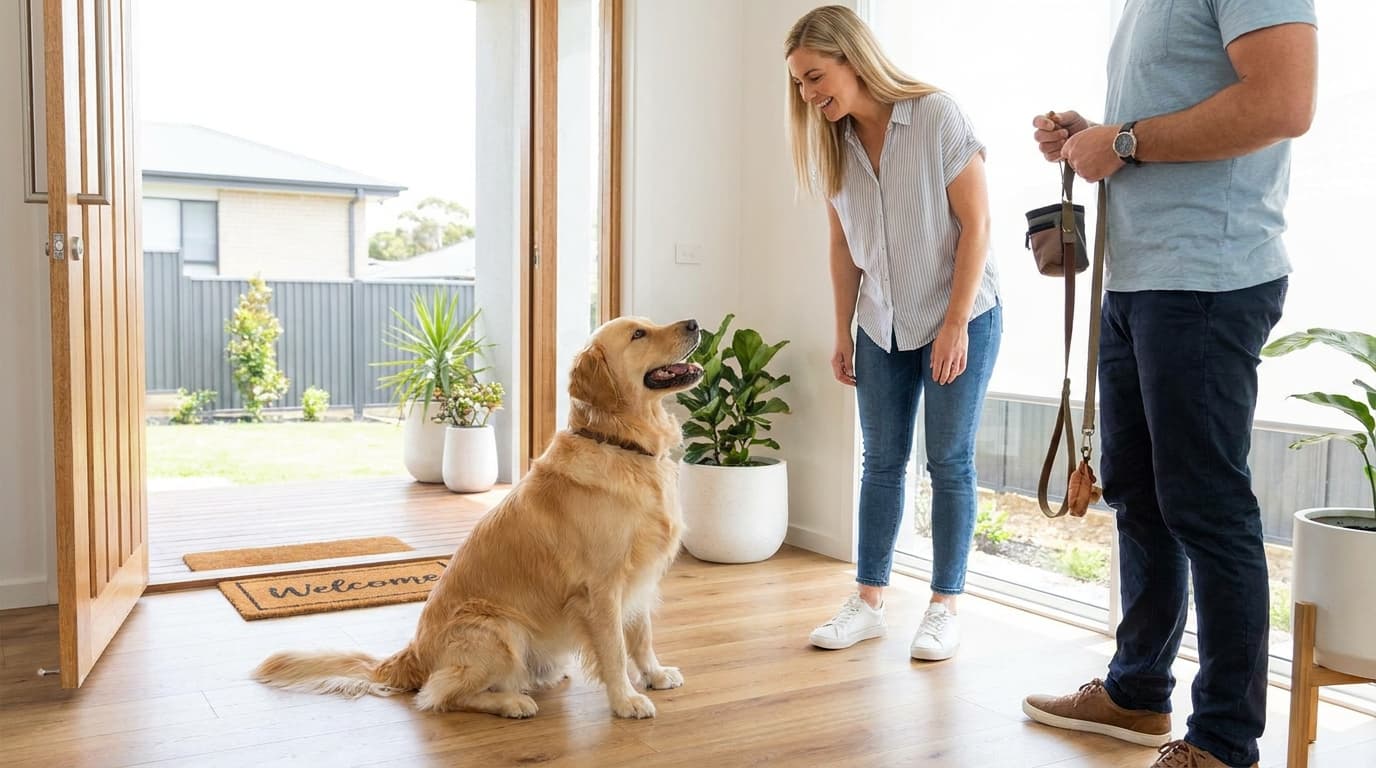
Your dog hears the doorbell, races to the entrance and launches straight at your visitor’s coat. You’re trying to say hello, protect a shopping bag and explain that your dog is friendly—all at once. It’s a familiar scene, and it doesn’t need louder instructions or a firmer push to change. Good dog greeting training gives your dog something clear and achievable to do, while making arrivals easier to manage before excitement takes over.
Make the doorway easier before you teach the greeting
For many dogs, jumping brings exactly what they want: faces come closer, hands reach down and everyone starts talking. Even being pushed away can become part of an exciting interaction. Rather than waiting for your dog to jump and then reacting, arrange the entrance so they can practise a different response. A secure gate, an exercise pen or a comfortable area away from the doorway can give you room to welcome someone without your dog rehearsing their usual launch.
Keep a sealed container of small training treats somewhere you can reach before opening the door, but your dog cannot help themselves to. If a lead is useful, attach it to a well-fitting harness and have an adult hold it with enough slack for comfortable movement. The lead is a safety backup, not a way to pull your dog down or hold them in a greeting they cannot handle. Avoid attaching a lead and leaving your dog tethered unattended, especially around an opening door.
Give visitors a quick plan before they arrive: “Please wait while I get the dog settled, then I’ll show you how to say hello.” Start with a willing adult helper rather than a group of excited guests. For children, anyone unsteady on their feet or visitors who are uncomfortable around dogs, keep a secure barrier in place. Nobody needs to participate in a training session simply because they have come to visit.
Show your dog what earns attention
Begin well away from the front door, with no visitors involved. While your dog is standing with all four paws on the floor, say a short marker such as “yes,” then deliver a treat low enough that they do not need to reach upwards. Reward several easy repetitions, moving a step between them so your dog can follow and stand again. You are making a simple connection: feet down makes good things happen.
A sit is optional; standing politely counts too. Some dogs find it easier to stay grounded when they are not also being asked to hold a particular position. Keep your hands low and avoid dangling food near your chest, which can accidentally encourage the very movement you are trying to change. Practise brief approaches with a familiar person, rewarding before your dog has time to spring upwards.
Once that feels easy, let a helper approach slowly while you reward grounded feet. If your dog jumps, the helper can pause and step back calmly, provided there is room to do so safely. Use distance or your barrier to reset rather than pushing, grabbing paws or repeating instructions over the excitement. As soon as your dog is grounded again, reward; on the next attempt, make the approach shorter or slower so they have a better chance of succeeding.
Rehearse arrivals in small, manageable pieces
The doorbell, moving door and new person can each be exciting, so avoid introducing everything at full intensity. Start with your helper outside while your dog stays at a comfortable distance behind a gate or beside you on a loose lead. Have the helper make a quiet knock, then reward your dog for keeping their feet down and being able to turn back towards you. If they rush forward, bark continuously or cannot engage with you as they normally would, reduce the sound or increase the distance.
Build the scene gradually: a knock, a hand on the handle, the door opening slightly, then a person appearing. Work on whichever part your dog finds difficult rather than repeating the whole arrival every time. A few successful repetitions are more useful than a long session that ends with everyone frustrated. In dog greeting training, progress may mean opening the door a little wider today—not necessarily having a complete greeting.
When your helper can enter without triggering a rush, ask them to stand slightly sideways with relaxed hands. Reward your dog for staying grounded, then invite a brief greeting if your dog chooses to approach with a loose, comfortable body. If they enjoy touch, the helper can offer a short stroke on the shoulder or chest, then pause to see whether your dog wants more. Keep food rewards with you initially so your visitor does not become a tempting treat dispenser your dog tries to climb.
Help real visits feel like practice
Actual guests are less predictable than a helpful training partner. Someone may squeal your dog’s name, bend over them or encourage a jump before remembering your instructions. Keep your request simple: “Please keep your hands low, and pause if their feet come up.” If a visitor cannot follow the plan, use your barrier and let your dog settle elsewhere rather than repeatedly testing them.
It also helps to teach a separate resting place away from the entrance. Introduce a mat during quiet moments, reward your dog for stepping onto it and gradually practise staying there while you move nearby. During visits, that familiar spot can offer an alternative to greeting, especially with a suitable chew or food toy your dog already uses safely. Give it in a separate, undisturbed space if your dog is uncomfortable with people approaching their food or belongings.
Watch the dog in front of you rather than working towards an imaginary deadline. Turning away, retreating or becoming stiff are reasons to offer space, not to insist that a guest keeps trying. If jumping on guests creates a safety concern, or greetings involve growling, snapping or persistent distress, seek help from a qualified reward-based trainer; a veterinarian can advise if the behaviour changes suddenly. For everyday practice, keep dog greeting training short and repeatable: prepare the doorway, reward grounded feet and allow a quiet retreat. The aim is a welcome your dog can manage, not a performance they have to endure.