
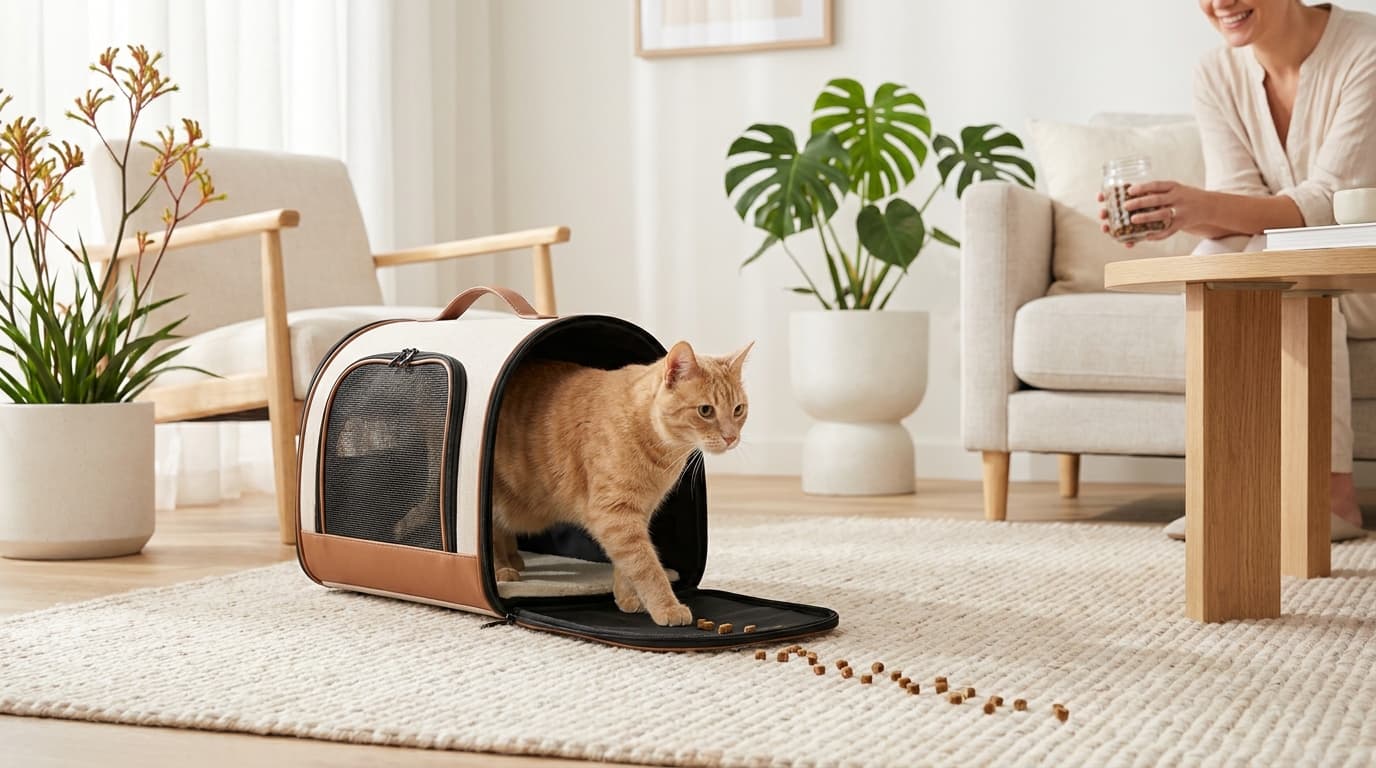
You pick up the carrier, and your cat disappears behind the sofa. Suddenly, getting out the door involves moving furniture, bargaining with treats, and wondering how such a small animal became so difficult to catch. The goal of cat carrier training is to change that familiar sequence: instead of predicting a chase, the carrier becomes a place your cat chooses to investigate. That starts well before you need to go anywhere, with small steps that leave your cat free to walk away.
Make the carrier part of everyday life
A carrier that appears only before an unfamiliar outing has a tough job winning your cat over. Leave it open in a quiet room where your cat already spends time, rather than bringing it out just before departure. Position it on a stable surface, with the entrance clear and the door secured so it cannot swing shut unexpectedly. Add a thin, familiar blanket, making sure it does not interfere with the door or fastenings.
The carrier itself should give your cat enough room to stand, turn around, and lie comfortably. A model with a removable top can make early practice easier because you can start with just the lower section, provided you follow the manufacturer's instructions when reassembling it. Check that every clip, zip, and latch works properly before training begins. If the carrier smells strongly of cleaning products, let it dry and air thoroughly before inviting your cat near it.
For the first few days, your only task may be making good things happen nearby. Place a favourite toy beside the carrier or offer a few small treats at a distance your cat accepts comfortably. A cat who watches from across the room does not need a treat trail stretching all the way inside. Start where they are willing to eat or play, then move closer over several relaxed sessions.
Reward the smallest steps toward going inside
Choose a quiet moment when your cat is awake and interested, and have rewards ready before you begin. Keep practice short: a minute or two can be plenty, especially at first. Pick a consistent marker, such as a softly spoken “yes,” and follow it immediately with a treat. Your cat will gradually learn that the word identifies the action that earned the reward.
At first, mark and reward something as small as looking toward the carrier or taking a step toward it. Next, look for a sniff at the entrance, a head inside, or one paw across the threshold. You do not need to ask for all of these in one session; repeat an easy step until your cat offers it comfortably. If they stop taking treats, crouch low, freeze, or retreat, make the next attempt easier or finish for now.
Reward placement helps explain what you are asking for. For a cat confidently approaching the entrance, place a treat just inside; once stepping in is easy, put the next reward slightly farther back. If reaching through the doorway makes your cat hesitate, place the treat first and move your hand away. Avoid holding food beyond their reach and slowly drawing them into a space they are reluctant to enter.
The key to voluntary carrier entry is that going inside does not immediately mean losing the option to leave. Keep the door open and let your cat step back out whenever they choose, without blocking the entrance with your body. You can occasionally toss a treat away from the carrier to reset the exercise, then reward another approach. This makes returning a fresh choice rather than the result of being cornered.
Teach staying inside before closing the door
Once your cat walks all the way in easily, resist the temptation to shut the door and declare success. Reward them inside, pause briefly, and offer another reward while the exit remains open. Build that pause gradually, starting with a moment rather than expecting a long stay. If your cat leaves, let them; next time, reward sooner or ask for less time.
This is where reward-based cat training benefits from careful observation rather than a fixed timetable. A cat who enters with a loose body and eats comfortably is giving you different information from one who stretches in with their back feet planted outside. Watch the whole cat, not just whether they reached the treat. Confident repetition matters more than progressing through a checklist quickly.
Introduce the door as a separate exercise while the carrier stays on the floor. First touch it, reward, and stop; later, move it a little, reward, and return it to the open position. Work toward briefly closing it, reopening it, and rewarding your cat, then separately introduce the latch. Keep these movements small enough that your cat remains comfortable, and step back if they rush out or begin avoiding the carrier.
Once brief closures are easy, extend the time in small increments while staying nearby. Offer rewards through an opening only if you can do so safely without risking fingers or letting your cat squeeze out. Reopen the door before your cat starts urgently trying to leave whenever possible. If they become distressed, end the exercise safely rather than waiting them out to prove a point.
Add movement without undoing the trust
A cat who rests comfortably in a stationary carrier may still find being lifted surprising. With the carrier fully assembled and securely latched, begin by touching the handle, then gently taking its weight without lifting. Progress to a tiny lift and set it down smoothly, supporting the base as recommended by the manufacturer. Reward after each manageable step, and avoid swinging or tilting the carrier.
Next, try carrying it a short distance across the room and returning it to its familiar spot. Later sessions can include walking toward the exit or sitting briefly in a stationary vehicle, if vehicle travel is part of your routine. Keep the carrier closed outside a secure indoor room, however calm your cat appears. Practise any travel restraint system according to its instructions, and never leave your cat unattended in a vehicle.
Expect progress to be uneven, especially after an outing your cat found difficult. Return to easy, open-door sessions rather than testing whether they will tolerate everything they managed previously. If transport is needed before training is established, contact your veterinary team for advice on safe handling; do not delay necessary care while waiting for training to work. Keep practice sessions separate from departure deadlines whenever you can.
The most useful measure of cat carrier training is not how quickly you can close the door. It is whether your cat comes back willingly for the next session. Leave the carrier available, reward the occasional unprompted visit, and keep practising easy entries even when no trip is planned. Next time you reach for the handle, you will have a familiar routine to build on instead of another chase.