

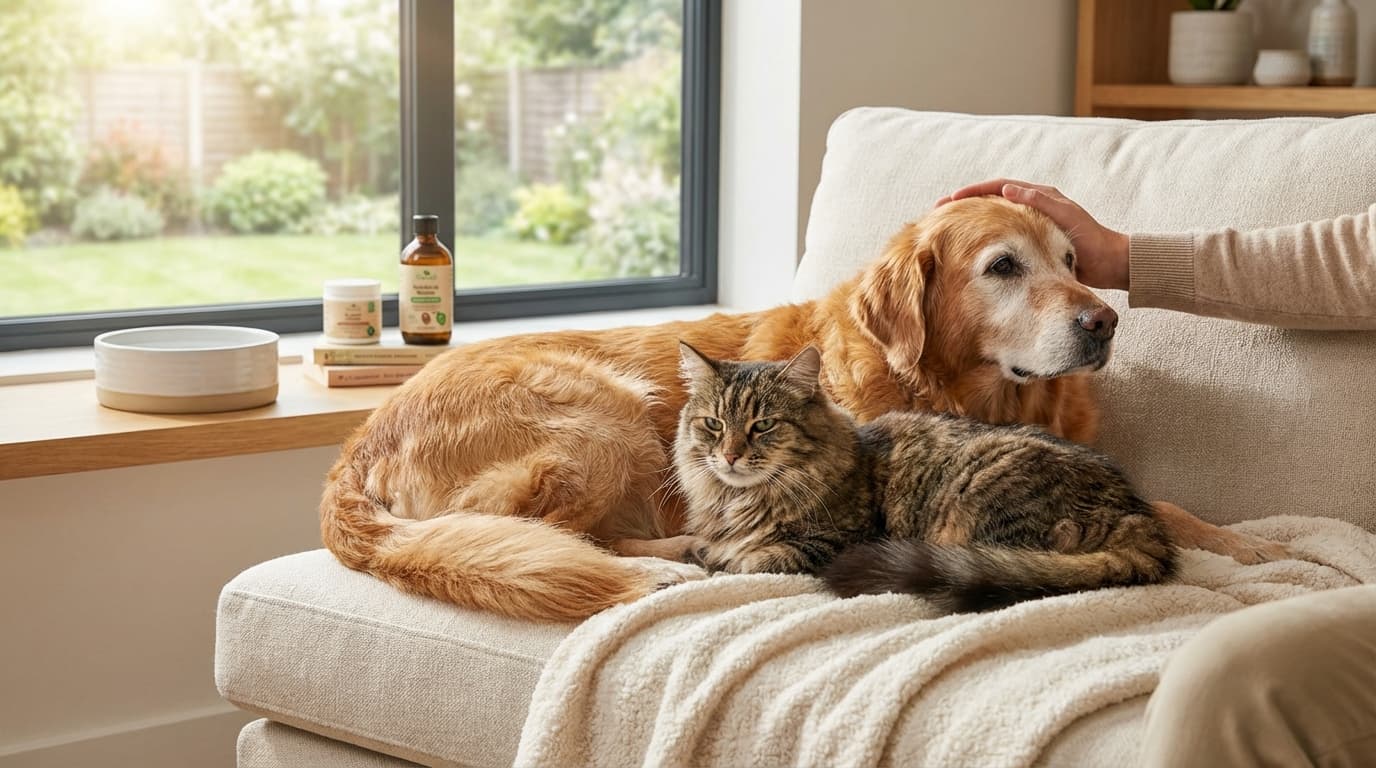
Noticing the “little” changes (and why they matter)
Senior pet care usually starts with a hunch, not a dramatic moment. Your dog hesitates at the doorway like the floor is slippery. Your cat pauses before jumping to a favorite perch, then chooses the chair instead. Or maybe your once-social pet now opts out of the action and naps in a quieter corner. Those small shifts are often your first clue that comfort needs have changed, and catching them early makes everything easier—because you can adjust the environment and routines before your pet feels stressed.
Aging doesn’t look the same in every animal, and it doesn’t follow a neat timeline. One elderly dog may still want long sniff-walks but need more recovery time after. Another slows down and becomes picky about where they rest. Old cat health can be equally varied: some cats get clingier, others become more private, and plenty simply get more opinionated about food, litter, and handling. The goal isn’t to “keep them young.” It’s to keep them comfortable, secure, and able to do the things that make them feel like themselves.
One practical habit that helps: start a simple “normal for my pet” list. How often do they drink? What’s their usual energy level? How high do they jump? How do they handle grooming? If something changes and stays changed for more than a short blip, it’s worth a chat with your vet. Senior pet care is mostly about noticing patterns—and responding with kindness and smart tweaks.
Make the house kinder to older joints and older senses
If you live with an elderly dog, floors can become the enemy overnight. Smooth surfaces that were fine for years can feel like ice once traction and confidence slip. A few washable runners or non-slip mats placed like stepping stones—bed to water bowl, water bowl to favorite hangout—can be a game changer. You’ll often see the relief immediately: fewer skids, fewer “wide stance” moments, and a dog who moves around without looking worried. For stairs, a baby gate can prevent risky solo trips, and a ramp can help in spots where jumping used to be easy.
Cats are masters of hiding discomfort, so the environment matters even more. Think of old cat health like this: if your cat has to choose between comfort and access, they’ll quietly pick access and tolerate discomfort… until they can’t. Lower the “difficulty level” around the home. A sturdy step or two near a favorite window, a lower-sided litter box, and a cozy bed that doesn’t require climbing can keep routines intact. If your cat loves high places, you don’t have to take them away—just create a safe route up with a chair, a shelf, or pet steps so they can climb in stages.
Bedding is another underrated comfort tool in senior pet care. Older pets often prefer supportive surfaces, but they also get cold more easily. A well-cushioned bed in a draft-free spot helps, and many pets appreciate having more than one rest area so they can follow you around without feeling like they have to “commute.” If your pet struggles to settle, try placing one bed where the household is lively and another in a quieter zone; some older pets like to be near their people but not in the center of foot traffic.
Don’t forget the sensory side of aging. Vision and hearing changes can make pets jumpy or clingy. Keep furniture layouts consistent so they can navigate confidently, and approach with a little more announcement—gentle voice, soft steps—especially if your pet startles when touched unexpectedly. It’s a small courtesy that makes daily life feel safer.
Daily routines that support comfort (without turning life into a medical project)
The best senior pet care routines feel normal. They’re not complicated; they’re just more intentional. Start with movement. Many older pets do better with shorter, more frequent activity rather than one big outing. With an elderly dog, a slow sniff-walk can be more satisfying than a fast march—let them read the “news” at their pace. Indoors, a few minutes of gentle play or a food puzzle can keep muscles and minds engaged without overdoing it.
For cats, play often needs a style update. If your cat used to launch into the air after a wand toy, try keeping the action low—slow drags, short pounces, and breaks built in. You’re not trying to exhaust them; you’re trying to keep them interested and moving in a way that feels good. If your cat enjoys brushing, that can double as bonding and a quick daily check-in for coat changes, sensitive spots, or new lumps that should be mentioned to your vet.
Food and water setup can also reduce strain. Raised bowls can be more comfortable for some dogs, while wide, shallow dishes can be easier for cats who dislike whisker contact. Make water easy to find—an extra bowl in a favorite room can encourage drinking without your pet having to trek across the house. And if you’re adjusting diet for old cat health or a senior dog’s changing needs, do it gradually and with your vet’s guidance, especially if your pet has a sensitive stomach or is already picky.
Grooming becomes a comfort issue as pets age. Mats pull at the skin, nails can affect how they walk, and some older pets don’t twist around to self-groom like they used to. Keep sessions short and low-pressure. For an elderly dog who’s not thrilled about standing, try grooming on a non-slip mat with breaks, or do a little each day instead of everything at once. With cats, many do best with quick, predictable brush sessions—same spot, same time, then done.
Hot weather and cold weather deserve special planning, too. In hot weather, older pets may tire faster and can be less willing to drink. Offer cool resting spots, shade, and activity during the cooler parts of the day. In cold weather, stiff joints often feel worse; a warm bed away from drafts and a cozy coat for dogs who tolerate it can make walks less of a chore. The theme is simple: remove friction from daily life.
Comfort check-ins: what to watch, what to tweak, when to ask for help
Living with a senior pet means becoming fluent in subtle signals. Changes in sleep, appetite, thirst, litter box habits, mobility, or mood are all worth noting. Sometimes it’s obvious—your elderly dog starts avoiding the car or the couch. Sometimes it’s oddly specific—your cat begins using the litter box but doesn’t cover, or starts meowing at night. Those aren’t “bad behaviors” so much as messages, and they’re exactly the kind of thing that belongs on your radar for old cat health and overall wellbeing.
A simple weekly at-home check can keep you grounded: run your hands over your pet during a calm moment and feel for changes in body condition, coat, and comfort. Are they losing muscle along the back legs? Is their coat getting greasy or dandruffy? Do they flinch when you touch a certain area? None of this is about diagnosing at home—it’s about collecting useful observations so you can describe changes clearly if you need veterinary advice.
Pain and anxiety can look like stubbornness. If your dog suddenly refuses a route they’ve walked for years, it might be fear of slipping or discomfort with a curb. If your cat starts avoiding a favorite room, it may be because getting there requires a jump they no longer trust. In senior pet care, the kindest question you can ask is, “What part of this is hard for you now?” Then adjust the setup—add a step, a mat, a night light, a second litter box—so your pet doesn’t have to struggle.
It’s also worth planning for the practical stuff before you’re in a rush. Keep a non-slip towel or support sling handy for dogs who occasionally need help standing or navigating steps. For cats, consider a carrier that opens from the top or has a wide, easy door; many older cats travel more calmly when they can be lifted in without awkward angles. These are small choices that reduce stress when you do need to go out.
If you’re ever unsure whether a change is “just aging,” that’s your cue to call your vet. Senior pet care works best as a team sport, and good clinics appreciate detailed notes: what changed, when it started, what makes it better or worse, and any videos of unusual movement or behavior. You’re not overreacting—you’re advocating.
Older pets have a special way of shrinking your world down to what matters: a comfortable place to rest, familiar people, and days that feel predictable and safe. If you do one thing this week, make one comfort upgrade—add traction to a slippery path, lower the litter box entry, set up an extra water station, or create an easy “step route” to a favorite spot. Those little changes are the heart of senior pet care, and your pet will feel the difference even if they never make a fuss about it.