

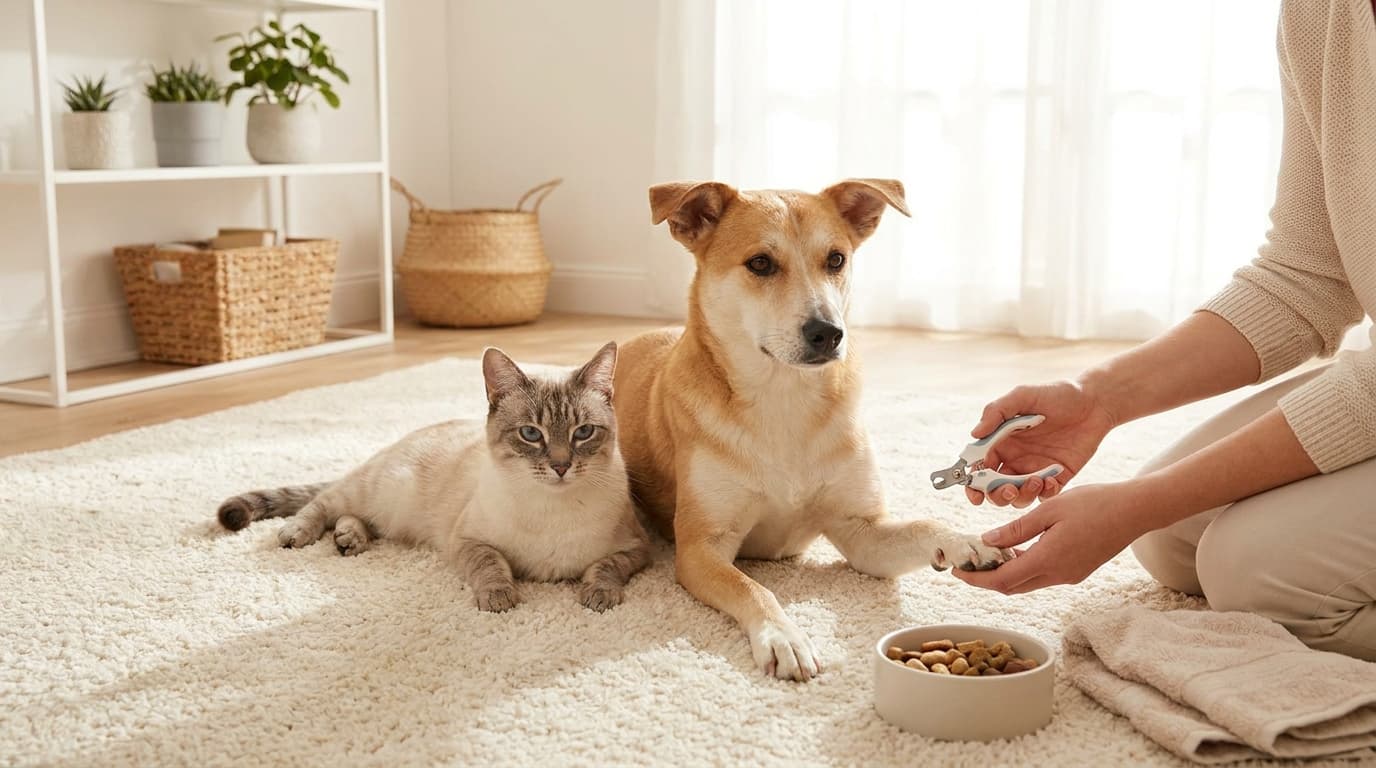
A pet’s nails can seem like a tiny grooming detail—right up until you are holding clippers, your dog is pulling one paw away, and you are suddenly wondering whether everybody involved needs a treat. If pet nail trimming makes you nervous, you are in very good company. The trick is not having a perfectly still pet or doing every nail in one sitting. It is creating a calm routine where your pet learns that paw handling is ordinary, brief, and followed by something pleasant.
Start by Making Paws Less Interesting
Before bringing out the clippers, spend a few short sessions simply handling your pet’s feet. Choose a relaxed moment, such as after a walk, a nap, or a quiet cuddle. Touch a shoulder or leg, gently hold a paw for a second, then let go and offer praise, a favourite toy, or a small reward. Build up gradually: touch the toes, lightly press a toe pad, and then release. For many pets, this preparation is more important than the actual trim.
Dogs who dislike their feet being touched are often trying to say, “This is unfamiliar,” rather than being difficult. Cats can be similar, although they may make their opinion more obvious. With cat nails, gently pressing the top and bottom of a toe helps extend the claw, which is useful practice even if you are not ready to clip anything yet. Keep these sessions short enough that your pet stays comfortable. Ending after two calm paws is far better than pushing through all four and turning the next attempt into a negotiation.
It also helps to let your pet investigate the tools without using them. Leave the nail clippers nearby during a relaxed treat session, then pick them up, set them down, and reward calm behaviour. If your pet is worried by the clicking sound, make a clip away from their paws and offer something enjoyable right after. This may feel slow, but it turns the equipment from a mysterious object into part of everyday life.
Choose the Right Tools and Set Up Your Space
A sharp, well-sized tool makes pet nail trimming much less stressful. Scissor-style clippers are often comfortable for small pets and cats, while guillotine-style clippers suit some dogs. A nail grinder can be a good option for pets who tolerate its gentle vibration and sound, although it is worth introducing it as gradually as any other tool. Dull clippers can pinch or crush the nail, so replace or sharpen tools when they no longer make a clean cut.
Set yourself up somewhere bright, quiet, and easy to clean. A non-slip mat can help a dog feel steadier, while many cats are happiest on a familiar blanket or on a lap with a calm helper nearby. Have treats within reach before you begin, because once you are holding a paw, you do not want to be searching through a cupboard with your elbow. If your pet has a thick coat around the feet, gently moving the fur aside first will give you a clearer view.
For dog nail clipping, look for the quick: the sensitive inner part of the nail that contains blood vessels and nerves. It is often visible as a pink area inside light-coloured nails. Dark nails are trickier because the quick cannot be seen clearly, so take very small amounts from the tip and inspect the cut surface after each clip. As you get closer to the quick, the centre of the nail may begin to look darker or slightly softer. There is no prize for taking off a large amount at once; small, regular trims are the low-pressure approach.
Cats usually have clear or pale claws, and their quick is often easier to spot. Trim only the sharp hooked tip, keeping well clear of the pink centre. Unlike dogs, cats also have a small extra claw higher up on the inside of the front legs, commonly called a dewclaw. It does not always wear down naturally, so remember to check it during your regular grooming routine.
The Calm, Step-by-Step Trim
Begin with the easiest paw, not necessarily the first one you reach. Some pets are more relaxed with their front paws, while others prefer you to start at the back. Hold the paw gently but securely, separate one toe, and position the clipper around the very end of the nail. Make one small cut at a slight angle, following the natural shape of the nail rather than cutting straight across in a dramatic chunk.
Pause after that first nail. Give your pet a reward, let them shift position if they need to, and decide whether they are still comfortable. A successful session might be one nail today, three tomorrow, and the rest later in the week. That still counts as pet nail trimming done well. Forcing a nervous pet to finish all their nails in one go can make the next session much harder than it needs to be.
If you accidentally clip too close and the nail bleeds, stay calm. Your pet will take cues from you, so a big reaction can make a small mishap feel alarming. Keep a pet-safe styptic product or another suitable nail-bleeding aid recommended by your grooming supplier on hand, apply it according to the product instructions, and give your pet a quiet break. If bleeding does not stop promptly, or you are concerned about your pet, contact a veterinary professional for guidance.
Watch your pet’s body language throughout. A loose body, soft eyes, and willingness to take a treat usually mean you can continue. Pulling away, lip licking, tense muscles, flattened ears, or repeated attempts to leave are signs to pause. There is nothing wrong with calling it a day. Nail care works best as a predictable habit, not an endurance test.
Keeping the Routine Manageable
Regular checks make nail care far easier than waiting until nails are very long. You may hear a dog’s nails clicking on a hard floor, notice a sharp scratch during play, or spot a cat’s claws catching on fabric. Those are useful reminders to take a look, but every pet’s wear pattern is different. Active dogs may naturally wear some nails down, while indoor cats and less active pets often need more frequent attention.
Try linking trimming to an existing routine: after brushing, during a quiet evening at home, or following a bath once your pet is dry and settled. Keep the mood boring in the best possible way. The goal is for dog nail clipping or cat claw care to become as unremarkable as checking a collar or filling a water bowl.
If you still feel uncertain, ask a professional groomer or veterinary team to demonstrate safe handling and clipping technique for your particular pet. A quick hands-on lesson can make a world of difference, especially with dark nails, wriggly puppies, or a cat who has decided their paws are private property. With patient practice, a good tool, and permission to take it one nail at a time, you and your pet can make this small grooming task feel much less daunting.