
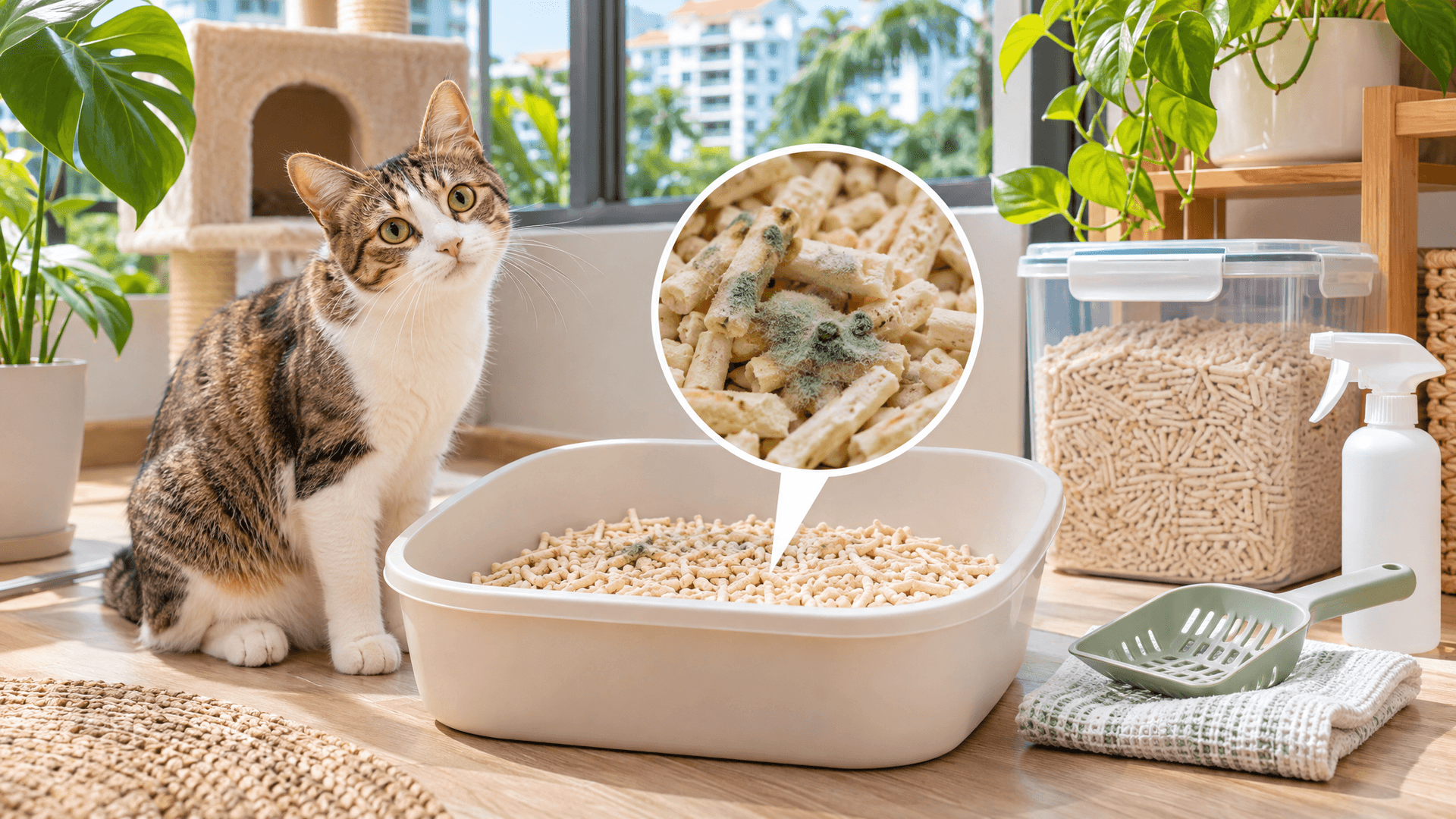
You scoop the tray and notice something odd: a dark patch, a few discoloured pellets, perhaps something that looks fluffy. In a Singapore flat, where temperatures sit around 26–33°C and the air often feels damp, it’s understandable to suspect mould. But not every colour change means something is growing in the litter. If you’re worried about mould in tofu cat litter, the practical approach is to assess what you can see without disturbing it, remove suspect litter, and tackle the moisture before refilling.
Is it mould, or just a colour change?
Tofu litter is plant-based, although its exact ingredients vary between products. Those ingredients can support mould growth when enough moisture is available; being absorbent doesn’t make the litter resistant to it. Urine left in the tray, splashes from a nearby shower, damp storage conditions and water trapped after washing can all contribute. Singapore’s humidity can also make it harder for a washed tray or damp storage area to dry thoroughly.
Colour alone, though, isn’t a reliable way to identify mould in tofu cat litter. Some pellets have natural variations in shade, while others contain colouring that should match the product description. Wet granules may look darker, and urine or faecal residue can stain them. A darker pellet in a used clump is therefore different from an unexplained fuzzy patch spreading across otherwise unused litter.
Raised, fuzzy or cotton-like growth is more concerning than a simple change in shade. An unexpected musty smell that you notice during normal handling is another reason to stop and investigate, but don’t lean in and sniff the litter to check. Neither appearance nor smell can reliably confirm or rule out mould at home. If you cannot explain a new patch, treat the litter as suspect rather than leaving it in use while waiting to see whether it spreads.
Deal with suspect litter before topping up
Keep your cat away from the affected tray while you sort it out, and provide a clean alternative with litter from an unaffected supply. Don’t stir through the pellets, shake the tray or sieve out the strange-looking bits. Visible growth doesn’t tell you how far contamination extends, so removing only the obvious patch isn’t a dependable solution. For suspected mould in a used tray, discard the entire contents rather than covering them with fresh litter.
Put on household gloves and transfer the litter gently into a rubbish bag, keeping dust and scattering to a minimum. Seal the bag and dispose of it with household waste according to your building’s arrangements; don’t flush it. Wash your hands after handling the litter and cleaning equipment. Adding deodoriser, mixing in fresh pellets or leaving the suspect litter in sunlight is not a reliable way to make it suitable for reuse.
If the unusual patches came straight from a newly opened bag, stop using that bag too. Photograph the affected pellets without disturbing them, along with the packaging, batch details and date marking, then contact the retailer for guidance. Keep the bag closed and away from pets while arranging a return or disposal. That information is more useful than trying to prove at home whether the problem began during manufacturing, transport or storage.
Wash the tray, then let it dry completely
Once the litter is removed, wash the tray with water and a mild, unscented detergent suitable for the tray material, following its care instructions. Work around the corners, underside of the rim and any joins where damp crumbs collect. Wash the scoop as well, and include removable rims or covers rather than cleaning only the base. Rinse everything thoroughly so there is no slippery detergent residue left behind, and never mix cleaning products.
Drying deserves just as much attention as washing. A tray can look dry from above while water remains underneath its rim or inside a recessed handle. Wipe it with a clean, dry cloth, then stand it somewhere with good airflow until every part is completely dry. Don’t immediately refill a tray that still has droplets in its corners: the fresh pellets will absorb that leftover water.
In a flat with one bathroom, the easiest workaround is often a spare tray. Your cat can use that while the washed tray dries outside the splash zone, rather than having you rush to refill it before the next shower. A fan can help air move around a clean, empty tray, but it shouldn’t be directed at suspect litter. If deep scratches or damaged seams keep trapping residue despite careful washing, consider replacing the tray.
Keep fresh stock out of the bathroom
The spare bag beside the toilet is convenient, but it may also be beside the wettest part of your home. Shower spray, a damp floor and repeated exposure to humid bathroom air are poor companions for plant-based litter. Choose a dry indoor cupboard away from bathrooms, sinks, laundry areas and windows that let rain blow in. Keep bags off damp floors and check that the cupboard itself has no leaks, condensation or musty smell.
Follow the packaging instructions for storage and reseal an opened bag promptly after pouring. If the bag doesn’t close securely, keeping it inside a clean, completely dry, tightly lidded container can help limit moisture exposure while preserving the batch information. A sealed container won’t solve moisture that is already inside, however. Never pour a new bag onto old remnants, and let any washed storage container dry fully before using it again.
Smaller bags can be more practical than a bulk purchase if one bag stays open for a long time in your home. Use older, unaffected stock first and check the packaging for tears or damp patches when it arrives. Scoop the tray at least daily, removing waste and damp clumps carefully, including fragments caught against the sides. Follow the litter maker’s guidance for full changes, adjusting your routine if several cats share the tray or damp residue keeps accumulating.
Reducing the chance of mould in tofu cat litter is mostly about managing where moisture lingers. If the tray must stay in the bathroom, position it beyond shower spray and wet-foot traffic, and use the room’s ventilation after showers. Move replacement stock somewhere drier even if the tray itself cannot move. The next time you refill, check three things first: a clean tray, completely dry corners and fresh litter from a dry, securely closed bag.