

Hot weather changes the rules for dogs. The same walk that feels “a bit warm” to you can feel like running in a fur coat to them, and the stuff we barely notice—hot pavement, a parked car warming up fast, a stuffy room with no airflow—can stack up quickly. The good news is that hot weather dog care doesn’t have to be complicated. It’s mostly about planning the day a little differently, watching your dog’s individual limits, and having a few cooling tricks ready before you need them.
Think like your dog: where heat builds up fast
A lot of dog heat safety comes down to understanding how dogs cool themselves. They don’t sweat all over like we do; they mainly lose heat through panting and a bit through their paws. That means humidity, poor airflow, and excitement can make overheating more likely even if the temperature doesn’t seem extreme. Picture a happy dog bouncing at the door, panting hard before you’ve even left the house—your “easy walk” has already started with their engine running hot.
Heat risk isn’t one-size-fits-all, either. Flat-faced breeds often have a harder time moving air efficiently when they pant, senior dogs may tire faster, and puppies can get themselves into trouble because they don’t know when to stop. Bigger dogs can struggle too, especially if they’re carrying extra weight or have thick coats. Even the super-athletic dogs aren’t immune; they’ll often push through discomfort to keep up with you, which is why you’re the one who has to call it early.
And then there’s the ground. Pavement, sand, and even some artificial turf can hold heat and burn paw pads. A quick reality check: if you can’t comfortably keep your hand on the surface for several seconds, it’s not a great place for your dog to be standing around. In hot weather dog care, the “where” matters as much as the “how long.” Shade, grass, and breezy routes make a bigger difference than most people expect.
Smarter routines: walks, water, and shade that actually help
The easiest win for cooling dogs is changing the schedule and the style of activity. Instead of one long outing, think shorter, calmer trips with more sniffing and less marching. Sniffing burns mental energy without spiking body heat the same way a jog does, and it’s surprisingly satisfying for most dogs. If your dog is the type who gets hyped the moment the leash comes out, build in a minute of calm at the door—wait for a sit, take a few slow breaths yourself, then head out. Starting cooler helps everything that follows.
Water is another place where small details matter. Bring water on longer outings, but don’t wait until your dog is panting like a bellows to offer it. Frequent small drink breaks are usually easier than one big gulp at the end, especially for dogs who get excited and swallow air. At home, place water where your dog actually hangs out, not just where the bowl “looks tidy.” In hot weather, some dogs will avoid drinking if the bowl is in a warm corner or the sun hits it for part of the day.
Shade and airflow are your quiet heroes. If your dog likes to nap near windows, check whether that spot turns into a sun-trap later in the day. A fan can help move air around, and closing curtains on the sunny side of the home can keep indoor temperatures steadier. If your dog is crated, make sure the crate isn’t positioned where heat builds up—against a wall that gets warm, in a closed room with still air, or near appliances that throw off heat.
You’ll also want to be careful with cars. Even a “quick stop” can become risky fast, and cracking a window isn’t the safety net people hope it is. If you need to run errands, it’s usually kinder to leave your dog at home with water and a comfortable spot than to gamble on timing.
Cooling dogs: what works, what backfires, and what to pack
When people think about cooling dogs, they often jump straight to ice-cold everything. In practice, gentle and steady cooling tends to be more comfortable and more sustainable. A cool, damp towel wiped along the belly and inner thighs can help, because those areas are less insulated than the back. A cooling mat can be a game-changer for dogs who won’t settle in hot weather, especially if they’re the type who keeps moving from floor to floor looking for “the cold spot.”
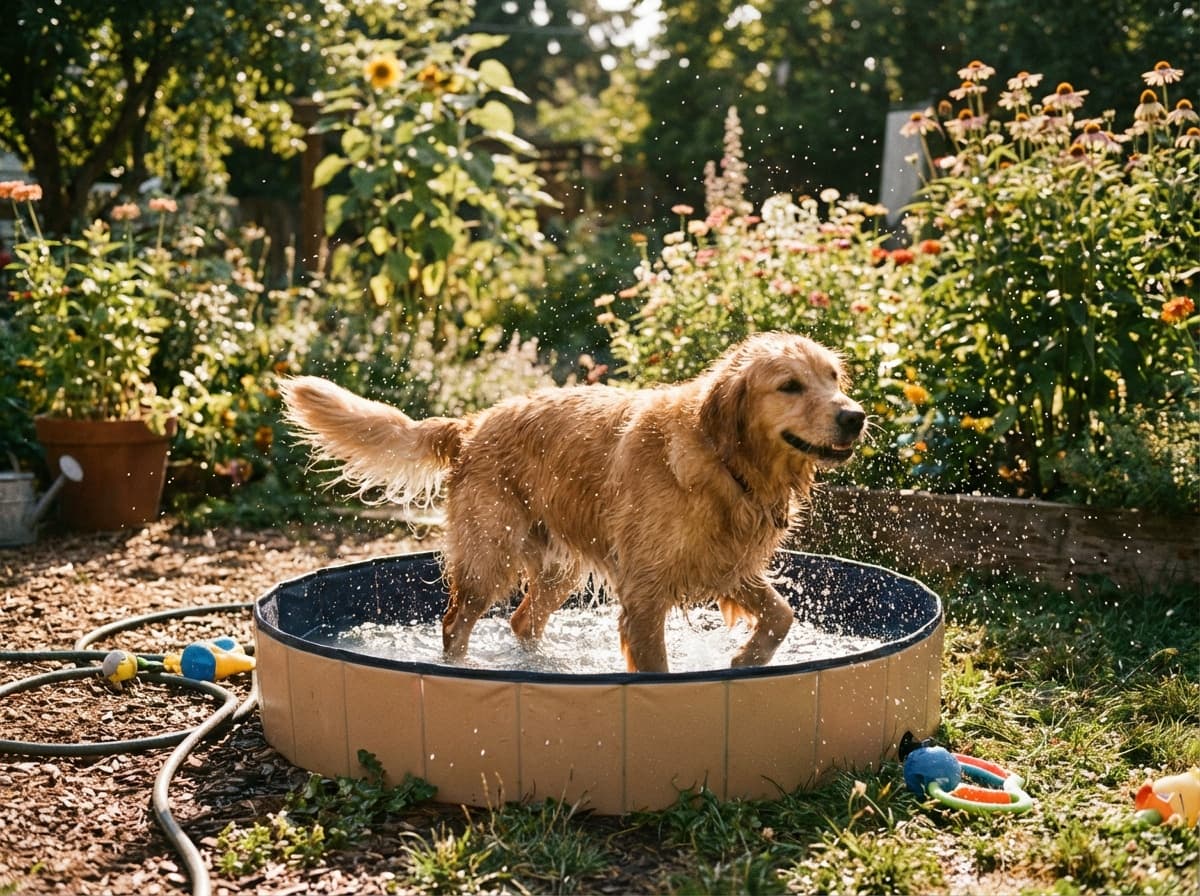
Some dogs love water play, but it’s worth matching the method to the dog. A shallow splash in a kiddie pool, a sprinkler on a low setting, or a slow hose rinse can all work—just keep it calm and supervised. If your dog gets wild with water and starts sprinting and barking, you may accidentally trade “cooling” for “overheating through excitement.” For those dogs, a quiet rinse, then a shaded rest with a chew can be more effective than a high-energy water party.
A quick note about wetting the coat: it can help, but thick coats can hold moisture and stay warm if there’s no airflow. If you soak your dog, pair it with shade and a breeze (natural airflow or a fan) so evaporation can do its job. And if you’re using a cooling vest or bandana, follow the product instructions and check it often—anything that stays warm and damp without airflow stops being helpful.
On walks, the “hot weather kit” doesn’t need to be fancy. Think practical: a collapsible water bowl, a bottle of water, and a plan for where you’ll find shade if your dog starts slowing down. If you’re going somewhere unfamiliar, it’s smart to know your exits—where you can cut the route short, where there’s grass instead of pavement, and where you can pause without being stuck in full sun.
Grooming also plays a role in dog heat safety, but it’s not as simple as “shave the coat.” Many coats actually help regulate temperature and protect skin from sun exposure. What usually helps most is regular brushing to remove loose undercoat and prevent matting, because mats trap heat and reduce airflow near the skin. If you’re unsure what’s best for your dog’s coat type, a professional groomer can guide you toward a summer-friendly maintenance routine without going too short.
Finally, keep an eye out for the early “I’m not okay” signals. Dogs don’t always dramatically collapse; more often they get subtly weird first—lagging behind, seeking shade, refusing treats they’d normally inhale, or looking for cool surfaces to lie on. If your gut says your dog is struggling, don’t negotiate with the walk. Head home or to a cool spot, offer water, and let them rest. If you’re worried about your dog’s condition, contact a veterinarian promptly.
Hot weather dog care is really about being the calm, slightly over-prepared friend in the relationship. You set the pace, you choose the route, you decide when it’s time to go inside. Do that, and you’ll find your dog still gets all the good stuff—sniffs, play, companionship—without paying the price for the heat.