
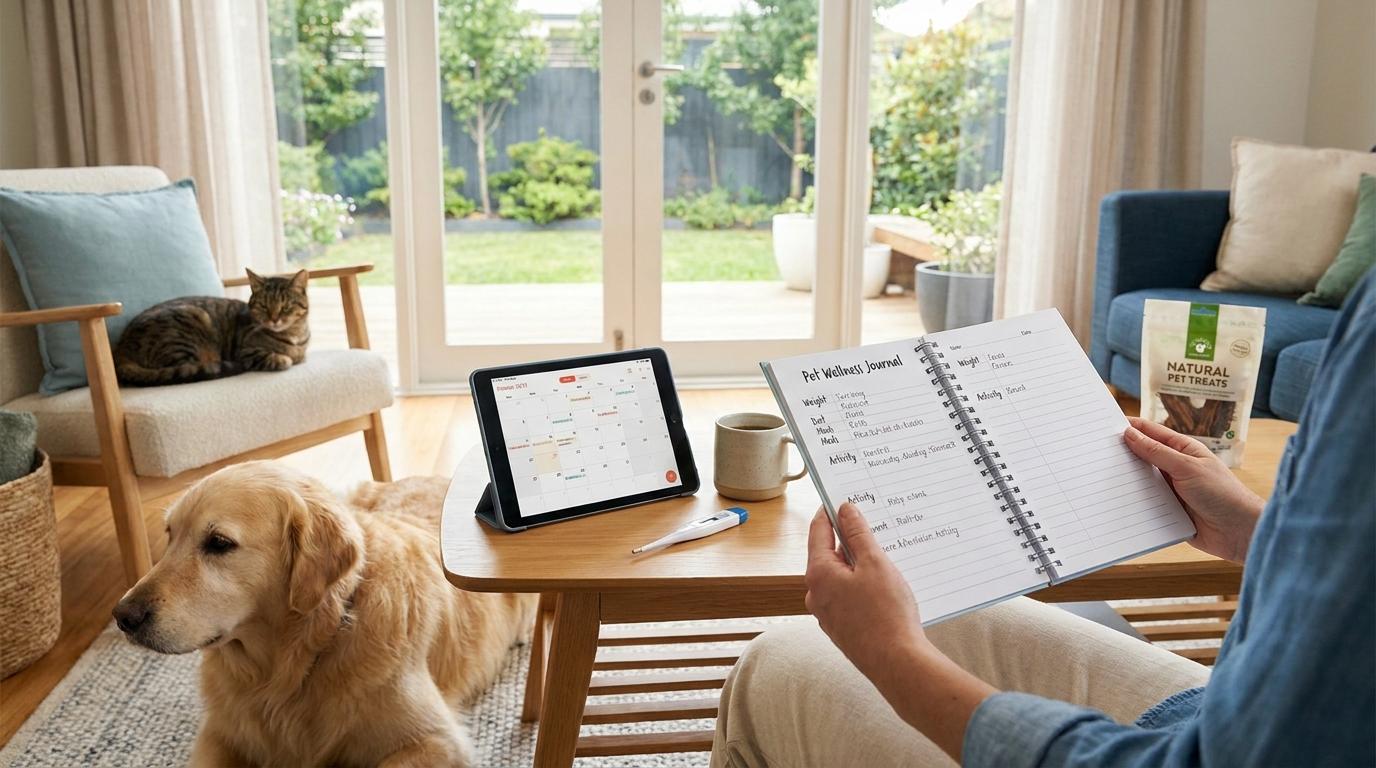
You’re sitting in the veterinary clinic when someone asks, “How long has that been happening?” Suddenly, the details blur. Was your dog leaving breakfast last week, or did it start earlier? Did your cat begin hiding before you moved the litter tray, or afterwards? A few notes made at home can save you from trying to reconstruct the whole story while holding a lead or reassuring a cat in a carrier.
A useful pet care log isn’t a diary of everything your animal does. It’s a place to capture everyday routines, changes and questions while they’re fresh in your mind. You can use a notebook, a phone note or a shared document; the best option is whichever you’ll actually keep using. The goal is to bring clearer information to your appointment, not give yourself another demanding chore.
Start with what’s normal for your pet
Before recording changes, write a short snapshot of your pet’s usual routine. Include their food, meal times, typical activity, toilet habits and how they generally behave at home. “Usually finishes breakfast straight away and asks for a walk afterwards” is more useful than “eats well.” For a cat, you might note favourite sleeping spots, usual play sessions and whether they normally greet visitors or disappear behind the sofa.
Record the exact food name and variety, along with the amount offered and any regular treats or extras. A photo of the packaging is handy, especially if someone else buys the food or you use several varieties. Note how you measure portions, too: “half of the blue scoop” is difficult to interpret unless you know what that scoop holds. If several people feed your pet, agree on one place to record meals so the picture includes everyone’s contributions.
Keep a small reference section for your pet’s date of birth or estimated age, previous veterinary paperwork and current medications, supplements and parasite-control products. Copy product details and the instructions provided by your vet rather than relying on memory. Include when each product was last given and flag anything you’re unsure about as a question. If you already have weight records from comparable measurements, keep those dates and figures together without trying to interpret them yourself.
Record changes with details you can actually use
The most helpful entries describe what you saw rather than what you think caused it. Instead of “Milo felt sick,” write, “Tuesday, 8 a.m.: sniffed breakfast, ate a few mouthfuls, then walked away; ate the remaining food at midday.” Add whether anything else was different, such as a new food, visitors or a changed routine. This keeps your pet care log factual and gives your vet room to ask the right follow-up questions.
For food and water, note meaningful departures from the usual pattern rather than attempting to document every mouthful. Record food offered and left behind, and describe changes in drinking as precisely as your setup allows. If two cats share a water bowl, say that you can’t tell which cat drank from it. Don’t restrict water or change your pet’s normal access just to get a cleaner measurement.
Toilet notes are worth keeping straightforward, even if they aren’t the most glamorous part of pet ownership. Record changes in frequency, where accidents happen, stool appearance, and anything unusual you notice during toileting. “Three indoor puddles since Monday, usually near the back door” gives a clearer picture than “having lots of accidents.” If more than one pet shares a litter tray or outdoor space, mark uncertain observations as uncertain rather than assigning them to the most likely animal.
Movement, rest, grooming and social behaviour deserve a place as well. You might notice your dog pausing before stairs, your cat choosing a lower perch, or either pet withdrawing from a game they usually enjoy. Add when it happens, how often you’ve seen it and what was going on immediately beforehand. For example, “Stopped twice on our usual short walk” is easier to discuss than “seems older lately.”
Make tracking easy enough to stick with
Good pet routine tracking should fit around caring for your animal, not interrupt it. Keep your notebook beside the food container or pin a shared note to your phone so it’s easy to find. A simple entry can follow the same pattern each time: date and time, observation, context and any follow-up. On an ordinary day, a brief “usual routine, nothing new noticed” may be all you need; expand when something changes.
Photos and short videos can capture details that are hard to describe afterwards. If your pet naturally shows an unusual movement or behaviour, record it from a safe distance without prompting them to repeat it. Save the original clip and label it with the date and context, such as “after waking, before breakfast.” Avoid chasing, repositioning or upsetting your pet for better footage, and don’t let recording delay getting help.
In a busy household, decide who updates the log and how other carers should contribute. A dog walker’s note about a shortened walk or a pet sitter’s record of unfinished meals may fill a gap you wouldn’t otherwise see. Keep entries in one place rather than scattered across messages and scraps of paper. If tracking starts to feel overwhelming, narrow it to the observations your vet has asked you to follow and the changes you want to discuss.
Turn your notes into a useful appointment summary
The day before your appointment, read through your pet care log and pull out the main points. Write down your top two or three concerns, when each began, how often it happens and whether you’ve noticed a change over time. Keep the full record available, but put this short summary first so the important details don’t get buried. Choose a few relevant photos or clips rather than expecting the veterinary team to search your entire camera roll.
For practical vet visit preparation, turn uncertainties into direct questions. You might ask, “Which changes should I keep recording?”, “Would you like me to measure anything differently?” or “What should prompt me to contact you before our next appointment?” Ask the clinic beforehand whether they want your notes emailed, printed or simply brought on your phone. After the visit, record the agreed next steps and any follow-up dates while the conversation is still fresh.
Your notes should support veterinary care, never become a reason to wait for it. If a change worries you, contact your veterinary clinic rather than waiting until you have a complete record or a scheduled appointment. You don’t need perfect observations to ask for guidance. The real value of this habit is simple: next time you’re asked when something started, you’ll have something more reliable than a hurried guess.