

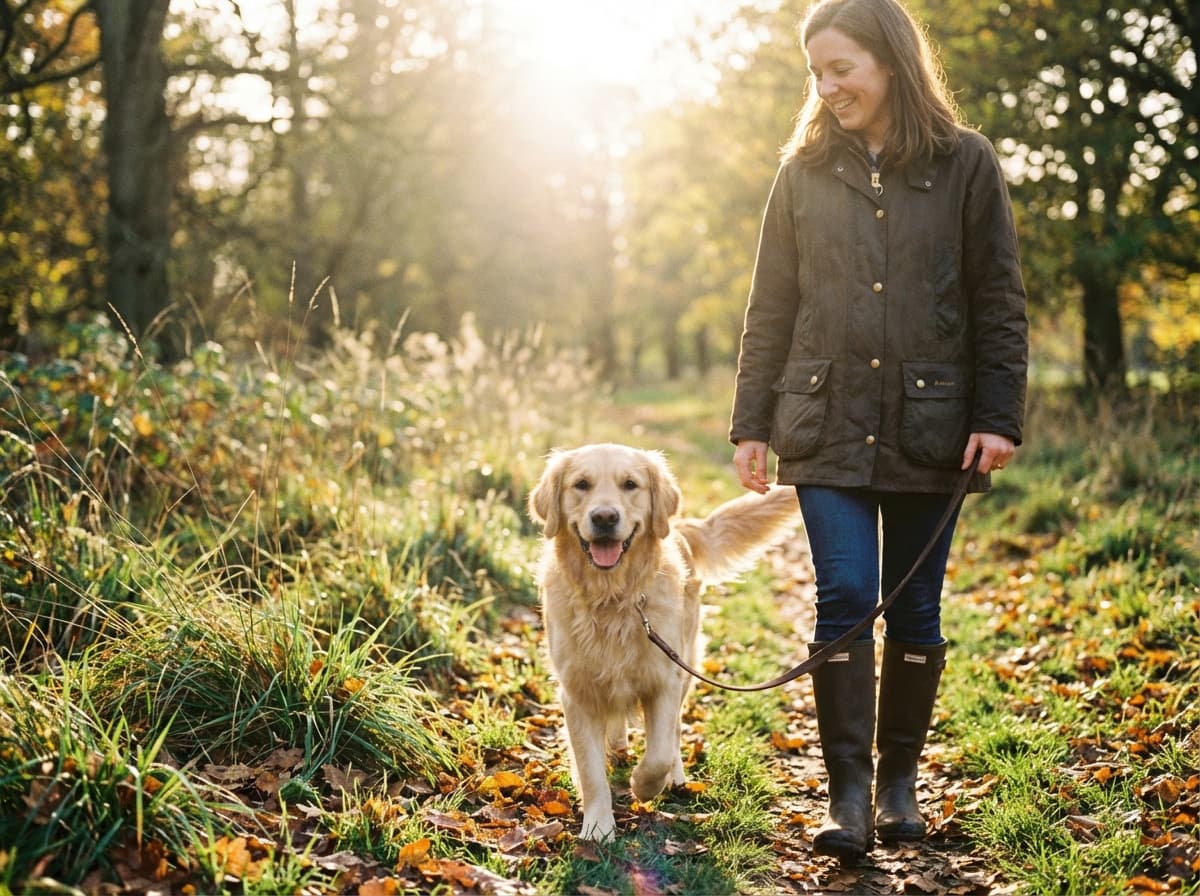
Walking a dog who pulls can feel like you’re being towed by a small, enthusiastic engine. You set off hoping for a relaxing stroll, and five seconds later your shoulder’s tense, the lead is tight, and your dog is laser-focused on whatever exciting thing exists at the end of the street. The good news: pulling isn’t your dog “being naughty” so much as your dog doing what works. If pulling gets them to smells, people, dogs, or just forward motion faster, they’ll keep pulling. The whole trick of lead training is making the “loose lead” version of walking more rewarding than the drag-you-along version.
Why pulling happens (and why it’s so hard to fix)
A lot of dogs pull because the world outside is basically a theme park. The pavement is full of messages from other dogs, the air is full of interesting scents, and there’s always the chance of seeing a friend (or a squirrel-shaped miracle). Add in the fact that humans walk slowly compared to a dog’s natural pace, and you’ve got a recipe for a tight lead.
Here’s the part most people miss: your dog is learning every single time you move forward on a tight lead. If the lead goes tight, your dog leans in, and you still end up reaching the tree they wanted to sniff, your dog’s brain files that under “pulling works.” That’s why quick fixes rarely stick. To stop pulling, you’re not trying to win a battle of strength—you’re changing the pattern so your dog starts thinking, “Oh, loose lead gets me places.”
A practical mindset shift helps too. Instead of judging the whole walk as “good” or “bad,” look for moments you can reinforce. Ten seconds of a loose lead while passing a driveway? That’s a win. A quick check-in glance before your dog surges forward? Also a win. In solid lead training, those tiny wins add up fast.
Set yourself up for success before you even step outside
Gear matters—not because there’s a magic product that instantly fixes pulling, but because the wrong setup can make learning harder. A comfortable, well-fitted harness can help you keep control without putting pressure on your dog’s neck, and a standard-length lead gives you enough room to teach without letting your dog rehearse sprinting. If you’ve been using a retractable lead, consider swapping it for training sessions; constant tension can accidentally teach your dog that “tight lead is normal.”
Then stack the deck in your favor. If your dog is already bouncing off the walls, do a two-minute “warm-up” indoors: a few simple cues your dog knows, a handful of rewards for calm, maybe a bit of sniffing in the yard or on a balcony if you have one. You’re not trying to tire them out completely—you’re just taking the edge off so your first thirty seconds of dog walking aren’t chaos.
Treat choice is another quiet game-changer. For a dog who’s obsessed with the outside world, everyday kibble often can’t compete. Think small, soft, smelly rewards that are quick to chew so you can keep moving. And don’t be shy about being “interesting” yourself—some dogs work better for a toy tug, a quick chase of a squeaky toy you bring along, or the chance to go sniff a specific spot as a reward. Yes, sniffing can be a reward. In fact, in lead training, “go sniff” is one of the most underrated tools you have.
The loose-lead skills that actually stop pulling
If you try to fix pulling only when it happens, you’ll spend the whole walk reacting. Instead, teach a few simple patterns that make your dog successful.
Start with what I call the “reward zone.” Pick a side (left or right) and decide that when your dog is near your leg with a slack lead, good things happen. At first, you might reward every couple of steps. That’s not “spoiling”—it’s building a new habit. As your dog starts choosing that position, you can stretch the time between rewards.
Now for the moment the lead goes tight. The most reliable way to stop pulling is to make pulling boring. The instant you feel tension, stop moving. Don’t yank back, don’t lecture—just become a tree. When your dog turns back or takes even one step toward you and the lead loosens, you move forward again. This is where people accidentally sabotage themselves: they stop, but the second the dog stops pulling (without actually loosening the lead), they walk on. Wait for slack. Your dog needs that clear cause-and-effect: tight lead = no progress, loose lead = progress.
If stopping dead creates frustration (you’ll know because your dog barks, spins, or bites the lead), try a gentler version: the “U-turn.” The moment the lead tightens, calmly turn and walk the other way, encouraging your dog to follow. When they catch up and the lead relaxes, reward and continue. This turns pulling into extra work for your dog, without turning the walk into a standoff.
One more skill that makes dog walking feel instantly easier: teach a cheerful “let’s go” cue for moving with you. Practice it in a low-distraction place. Say your cue, take a few quick steps, and reward when your dog follows with a loose lead. Later, when you see your dog about to lock onto something exciting, you can use “let’s go” before the lead goes tight. Prevention is always easier than repair.
Use sniff breaks on purpose (so your dog doesn’t steal them)
Dogs pull most when they’re desperate to reach something. So give your dog planned opportunities to do the thing they want—sniff. Pick a spot, ask for a second of a loose lead (or a quick check-in), then say something like “go sniff” and walk them over on a loose lead as the reward. You’re teaching that polite walking is the ticket to the good stuff.
This is especially powerful if your dog pulls hardest at the start of the walk. Try making the first minute a structured “sniff break” where you move slowly and let them explore, but only while the lead stays loose. You’ll often see the intensity drop once they’ve read the local “news.”
Real-life troubleshooting (because the street is not your living room)
Even with perfect technique, some situations will blow your dog’s brain a little. Passing another dog, walking near a busy area, or heading toward a favorite park can crank excitement up to eleven. That doesn’t mean your training failed—it means you need to adjust the difficulty.
Distance is your friend. If your dog starts pulling toward a distraction, create more space before you ask for good manners. Cross the street, step into a driveway, or simply turn around and make a little loop until your dog can think again. In lead training, this is called working under threshold, but you don’t need fancy terms—just remember: if your dog can’t take a reward or can’t respond to their name, the situation is too hard right now.
Also, watch your own pace and timing. Many dogs pull because their person walks in a straight line at a steady speed, which is basically an invitation to forge ahead. Try mixing in little changes: slow down, speed up for three steps, make gentle curves. You’ll feel a bit like you’re dancing with your dog at first, but it keeps them engaged and makes it easier for them to pay attention.
If your dog is a chronic “end-of-lead” walker, check whether they’re getting enough reinforcement for being near you. People often reward only when the dog is perfect, but perfection is rare outdoors. Reward the try. Reward the moment your dog chooses to come back to your side. Reward the slack lead, even if it only lasts two steps at first. That’s how you build duration without constant conflict.
And let’s talk about your expectations. Some dogs can learn to walk politely in a couple of weeks; others need a couple of months of consistent practice. The biggest factor is rehearsal: the more times your dog practices pulling and still gets where they want, the harder it is to change. If you’re in a phase where you just need to get from A to B, consider separating “training walks” from “exercise walks.” Training walks might be shorter and focused. Exercise can come from games at home, scent work in the yard, or a safe enclosed space where your dog can move more freely without practicing pulling.
If you’re dealing with lunging, intense reactivity, or you’re worried about safety, it’s worth getting help from a qualified trainer who uses reward-based methods. They can spot the tiny timing issues that are hard to notice on your own and tailor a plan to your dog’s triggers—without turning dog walking into something you dread.
The nicest part about fixing pulling is what you get back. Not just a loose lead, but a dog who’s actually walking with you—checking in, exploring, and sharing the outing instead of dragging you through it. Next time you clip on the lead, pick one skill to focus on for five minutes, reward generously, and end on a small success. That steady, low-drama consistency is what truly helps stop pulling and makes lead training stick.