

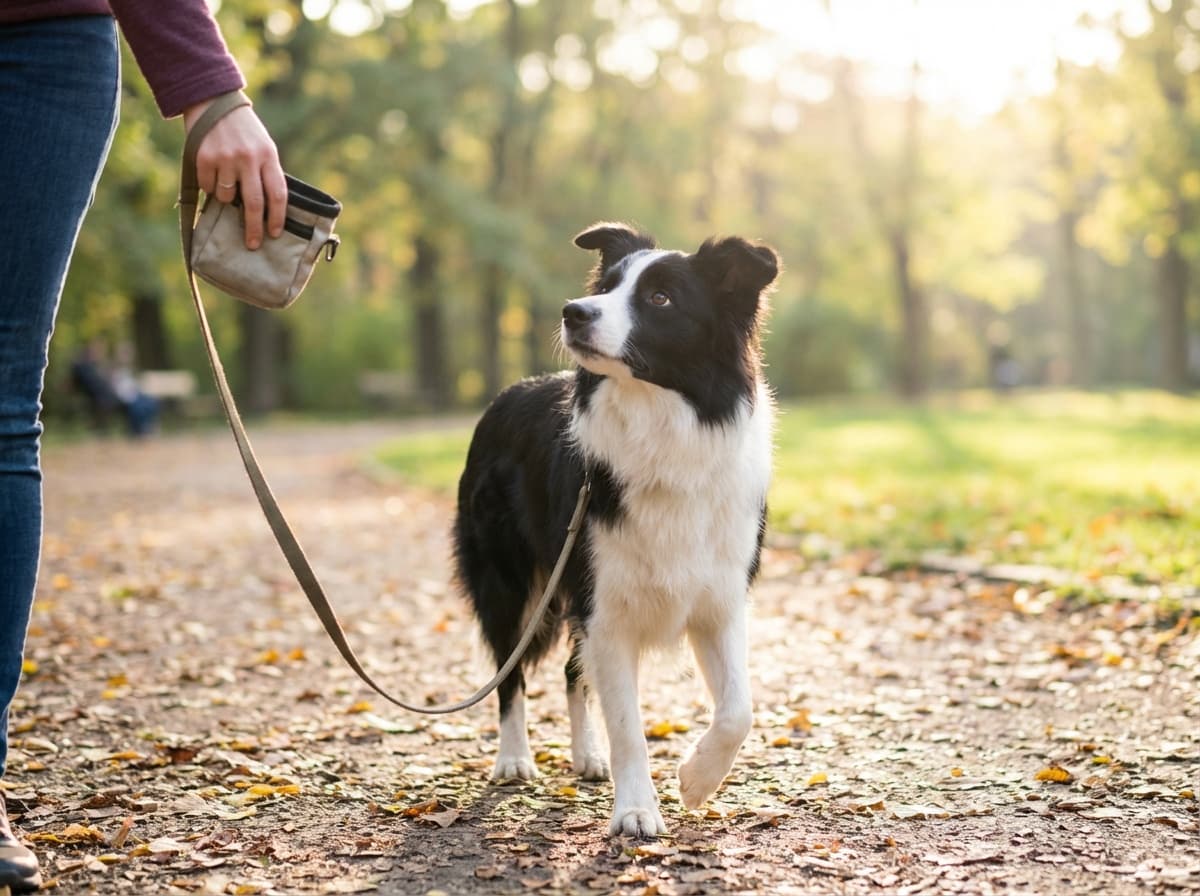
Walking a dog who pulls can feel like you’re being towed down the street by a happy little tractor. You set out hoping for a calm sniff-and-stroll, and two minutes later your shoulder’s tense, the lead is tight, and your dog is laser-focused on the next exciting smell. The good news: most pulling isn’t “bad behaviour” so much as a dog doing what works. They pull, they get to the thing faster, and the habit gets stronger every single time.
The trick with lead training is making one simple idea pay off more than pulling: a loose lead is what moves the walk forward. That’s it. Not a battle of strength, not a constant stream of corrections—just a clear, repeatable pattern your dog can understand on a busy day when their brain is full of sights, sounds, and smells.
Why dogs pull (and why it’s so hard to “just stop”)
Most dogs pull because the outside world is basically a theme park. Smells are louder than your voice, movement is thrilling, and other dogs can feel like magnets. Add a bit of natural enthusiasm or a history of “pulling works,” and you’ve got a dog who thinks a tight lead is normal.
It also doesn’t help that humans walk in straight lines at a steady pace, while dogs prefer zig-zagging, pausing, and investigating. If your dog is always slightly under-stimulated on walks, pulling can become their way of creating action—getting to the next scent, the next person, the next patch of grass. That’s why “stop pulling” usually isn’t solved by one tool or one command; it’s solved by changing the whole conversation you’re having through the lead.
Before you start retraining, do a quick reality check: if your dog is suddenly pulling much harder than usual, seems uncomfortable, or is reacting to things they normally ignore, it’s worth checking in with a vet or qualified professional. Pain, fear, and stress can make lead behaviour look “stubborn” when it’s really your dog struggling.
Set yourself up for easier lead training (gear, timing, and expectations)
Let’s talk equipment, because it matters—but not in the “buy this and you’re done” way. For most dogs, a comfortable, well-fitted harness can make dog walking safer and more pleasant while you work on skills. It spreads pressure more evenly than a collar if your dog does lunge, and it gives you a bit more control without relying on discomfort. If you’re not sure about fit, check that you can slide a couple of fingers under straps and that nothing rubs behind the front legs.
Lead length changes the whole game too. A very short lead can make pulling worse because your dog has no room to make good choices. A slightly longer lead gives them space to sniff and move without immediately hitting the end. You’re not aiming for “perfect heel” on every walk; you’re aiming for a lead that stays loose most of the time because your dog has learned how to keep it that way.
Timing is your secret weapon. Don’t start your toughest practice right outside the door when your dog is already revved up. If you can, do 30 seconds of calm behaviours first—think a few treats for standing still, a couple of easy cues your dog knows, or even just waiting for a soft, relaxed body before you clip on the lead. That tiny pause helps your dog’s brain switch from “launch mode” to “learning mode,” which is gold for lead training.
And set expectations that match the environment. A quiet hallway or driveway is training easy-mode. A busy path with other dogs, food smells, and fast movement is training hard-mode. Your goal is to practice in places where your dog can succeed, then gradually bring those skills into more exciting dog walking situations.
The loose-lead habit: what to do the moment your dog pulls
Here’s the core rule that helps most people finally make progress: if the lead goes tight, the walk stops. Not in an angry, dramatic way—more like you’ve turned into a tree. The instant the lead tightens, plant your feet and wait. The moment your dog releases pressure (even by shifting weight back or glancing at you), you move forward again. You’re teaching a simple cause-and-effect: tight lead = no progress, loose lead = we continue.
At first, this can feel painfully slow, especially if you’re used to pushing through the pulling to get somewhere. But you’re not “losing time”—you’re investing it. In the early days of stop pulling work, you might only make it a short distance. That’s normal. If your dog has practiced pulling for months or years, it’s not going to vanish in two walks.
If your dog hits the end of the lead and stays there, add a gentle reset instead of waiting forever. Turn your body and take a few steps the other way, like a calm U-turn. The moment your dog catches up and the lead loosens, you continue. You’re not yanking them away from fun; you’re showing them that staying connected to you is what keeps the adventure going.
Rewards make this click faster. Bring small, high-value treats on walks and pay your dog for the behaviour you want: walking near you with a loose lead, checking in, choosing to slow down when you slow down. Think of it like giving your dog a paycheck for good work. Over time, the environment becomes part of the reward too—sniffing that interesting spot can be earned by walking politely to it.
One of my favourite “insider” tricks for lead training is to reward position, not perfection. If your dog is walking on a loose lead but a little ahead of you, that’s still a win. Pay it. You can shape a closer position later, but right now you’re building the foundation: loose lead equals good things.
Turn sniffing into your best training tool
Dogs pull for access. So use access as your reward.
Pick a few “sniff spots” on your route—trees, posts, grassy edges—and treat them like mini destinations. Ask for just a couple of loose-lead steps, then cheerfully say something like “go sniff” and let your dog investigate. This is powerful because it teaches your dog that you’re not the fun-police; you’re the guide who helps them get what they want. It also makes dog walking feel cooperative instead of controlling.
If your dog starts dragging you to every smell, flip the script. The smell only becomes available when the lead is slack. If they pull, you pause. If they soften, you move. Soon your dog starts offering that little step back on their own, because they’ve learned it’s the fastest way to get the good stuff.
Common sticking points (and how to get past them)
A lot of people get stuck because they only train when the dog is already over threshold—meaning too excited to think. If your dog sees another dog and instantly turns into a kite on a string, that’s not the moment to demand perfect lead manners. Create distance early, step off to the side, and feed a few treats for looking at you or for calm breathing. You’re building a new emotional response while also practicing stop pulling in a realistic way.
Another common issue: the walk starts with a burst of pulling and then improves. That’s usually “anticipation energy.” Try making the first few minutes boring on purpose. Walk small loops near home, change direction often, and reward calm steps. Once your dog is in a learning rhythm, then head toward the more exciting areas. It feels backwards, but it prevents your dog from rehearsing the worst pulling right at the start.
If your dog is strong, adolescent, or simply determined, use management so you can actually practice. That might mean choosing quieter routes, walking at less busy times, or doing shorter training walks plus extra enrichment at home. A food puzzle, a sniffing game, or a short training session can take the edge off so your dog isn’t trying to get all their stimulation from yanking you forward.
And if you’re thinking, “My dog only pulls with me, not with my partner,” that’s usually a consistency problem, not a respect problem. Everyone who walks the dog needs to follow the same rules for stop pulling. If one person allows towing, your dog will keep trying it, because sometimes it works.
Finally, don’t underestimate your own lead handling. Keep your hands low and relaxed, avoid constantly tightening and loosening, and try not to “steer” your dog with the lead. The lead is information, not a steering wheel. When you move smoothly and predictably, your dog has an easier time matching you.
Lead training isn’t about winning a tug-of-war. It’s about teaching your dog a new habit that pays well in the real world. Bring rewards, be consistent about what a tight lead means, and give your dog plenty of chances to succeed in easier environments before you ask for their best behaviour in the most exciting ones. The next time you clip on the lead, aim for one thing: a few minutes where the lead stays loose and you both feel like a team. That’s how better dog walking starts—and it’s how it sticks.