
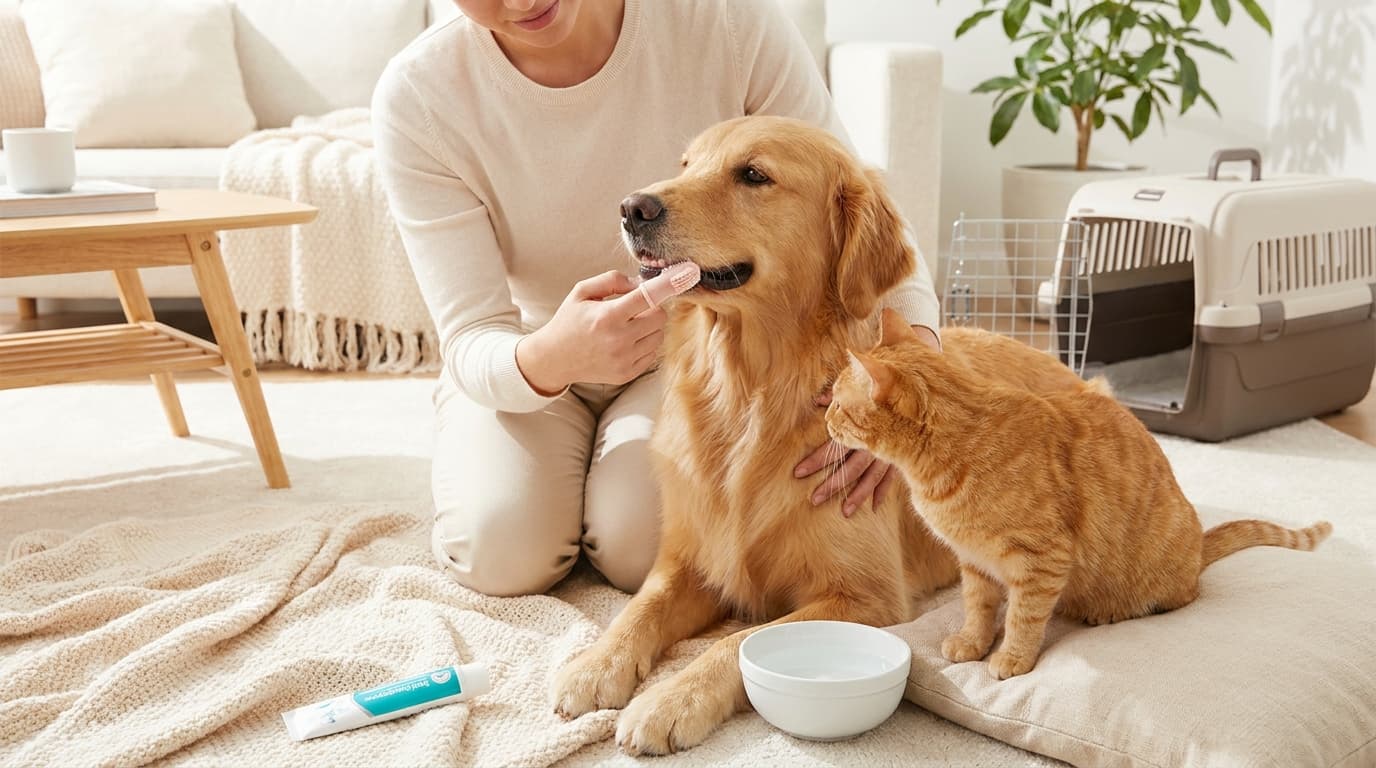
Your dog spots the toothbrush and ducks behind the sofa. Your cat takes one sniff of the toothpaste and leaves the room. If that sounds familiar, you don’t need a firmer grip or a way to prise their jaws apart—you need a smaller first step. Gentle pet toothbrushing starts with helping your animal feel comfortable around your hands and the equipment, long before you attempt a thorough clean.
The useful surprise is that you can begin with the mouth comfortably closed, lifting the lip just enough to reach the outside surfaces of the teeth. There’s no need to open wide or reach every tooth during those early attempts. Your first goal is simply to make the experience predictable, brief, and easy to leave. Think of it as teaching a new household skill rather than getting a chore finished.
Make the setup comfortable before you touch a tooth
Choose a quiet spot with secure footing and enough light to see what you’re doing. A dog might prefer standing on a non-slip mat beside you, while a cat may feel more settled on the floor or a familiar perch with room to move away. Avoid cornering your pet, pinning them against your body, or turning your lap into a restraint. Sit beside them rather than looming over their face, and let them investigate before your hands approach.
Have a soft-bristled pet toothbrush, toothpaste labelled for the species you’re brushing, and a few suitable rewards within reach. Check the brush head against the size of your pet’s mouth; a bulky head makes delicate movements awkward, especially with cats and small dogs. Finger brushes suit some animals, but others find them too large or dislike a finger near their teeth. Never put your finger between the jaws, and don’t use human toothpaste or products that aren’t intended for pets.
Let your pet sniff the brush without moving it towards their face, then offer a reward away from the equipment. You can offer a tiny taste of pet toothpaste separately, following its label instructions, so the flavour isn’t another surprise during brushing. If they dislike it, try another suitable flavour rather than holding them still until they accept it. Keep the brush clean and store it separately from human toothbrushes, ready for another brief practice.
Teach the lip lift as its own little skill
Before adding a brush, practise bringing your hand towards the side of your pet’s face. Pause before contact, reward relaxed behaviour, and gradually work towards a brief touch on the cheek. Look for a loose body and a pet who stays nearby or willingly returns after a pause. A turned head, stiff posture, flattened ears, repeated attempts to leave, or a swishing tail in a cat can mean you’ve made the step too difficult.
Once cheek touches feel ordinary, gently lift a small section of upper lip with a fingertip while leaving the jaw alone. Release immediately and reward; you’re not trying to hold the lip up while you inspect the whole mouth. Begin wherever your pet is most comfortable being touched, often beside the longer canine tooth rather than directly beneath the nose. A tiny lift that reveals one tooth is plenty for an early session.
Repeat that easy version over several short sessions, only increasing the duration when your pet remains comfortable. You might spend several days on face touches, and longer on lip lifts, especially with an animal who dislikes handling. There is no deadline to catch up with, and getting through a step while your pet freezes isn’t the same as acceptance. If they leave, let them go; next time, return to an easier step instead of following them with the brush.
Bring in the brush without opening the jaws
Now let the brush join a movement your pet already understands. Lift the lip briefly, touch the bristles to the outside of one tooth, then remove both your hand and the brush before offering a reward. Don’t scrub at this stage, and don’t slip the brush between the upper and lower teeth. For pet toothbrushing, a calm single-tooth touch is a more useful starting point than a hurried attempt to cover the mouth.
When that touch becomes unremarkable, add one or two light, small movements along the tooth’s outer surface near the gumline. Use gentle pressure rather than flattening the bristles, and keep the brush head visible so you know where it is. The jaw can stay relaxed and mostly closed while you work beneath the lifted lip. If you can’t comfortably see or reach an area, leave it rather than levering the mouth open or pushing the brush farther back.
Build coverage gradually: one tooth, then a couple of neighbouring teeth, then a small section on the other side. You can split practice into separate sessions rather than trying to complete both sides at once. Cats often need especially small equipment and tiny increments, but the same stop-and-reward approach works for dog dental care too. Ask your veterinarian to demonstrate brush placement for your individual pet before attempting areas you’re unsure about, including any inner tooth surfaces.
Build a routine your pet can comfortably repeat
Attach practice to an ordinary daily cue, such as a quiet moment after you put away feeding bowls. Prepare everything first so your pet isn’t waiting while you search for toothpaste with one hand on their cheek. Once brushing is comfortably established, aim for a daily routine, with your veterinarian’s guidance for your pet. During the learning stage, keep pet toothbrushing sessions short enough to finish before either of you gets frustrated.
Keep track of what was comfortable rather than counting only the teeth you reached. A note such as “left cheek touch fine; right lip lift too much” gives you a useful starting point tomorrow. In cat dental care, this can help you notice that the location or position matters as much as the brush itself. If progress stalls, change one thing at a time—perhaps the brush size, toothpaste flavour, or practice spot—rather than changing the whole routine.
Stop if you notice bleeding, apparent discomfort, or a sudden change in your pet’s tolerance, and contact your veterinarian before continuing. The same applies if you notice a damaged tooth or your pet has difficulty eating; don’t try to solve those concerns by brushing harder. Some pets need an individual handling plan, and your veterinary team can help you work out a manageable approach. Tonight’s success might simply be a relaxed lip lift followed by a reward—and that is a worthwhile place to start.