
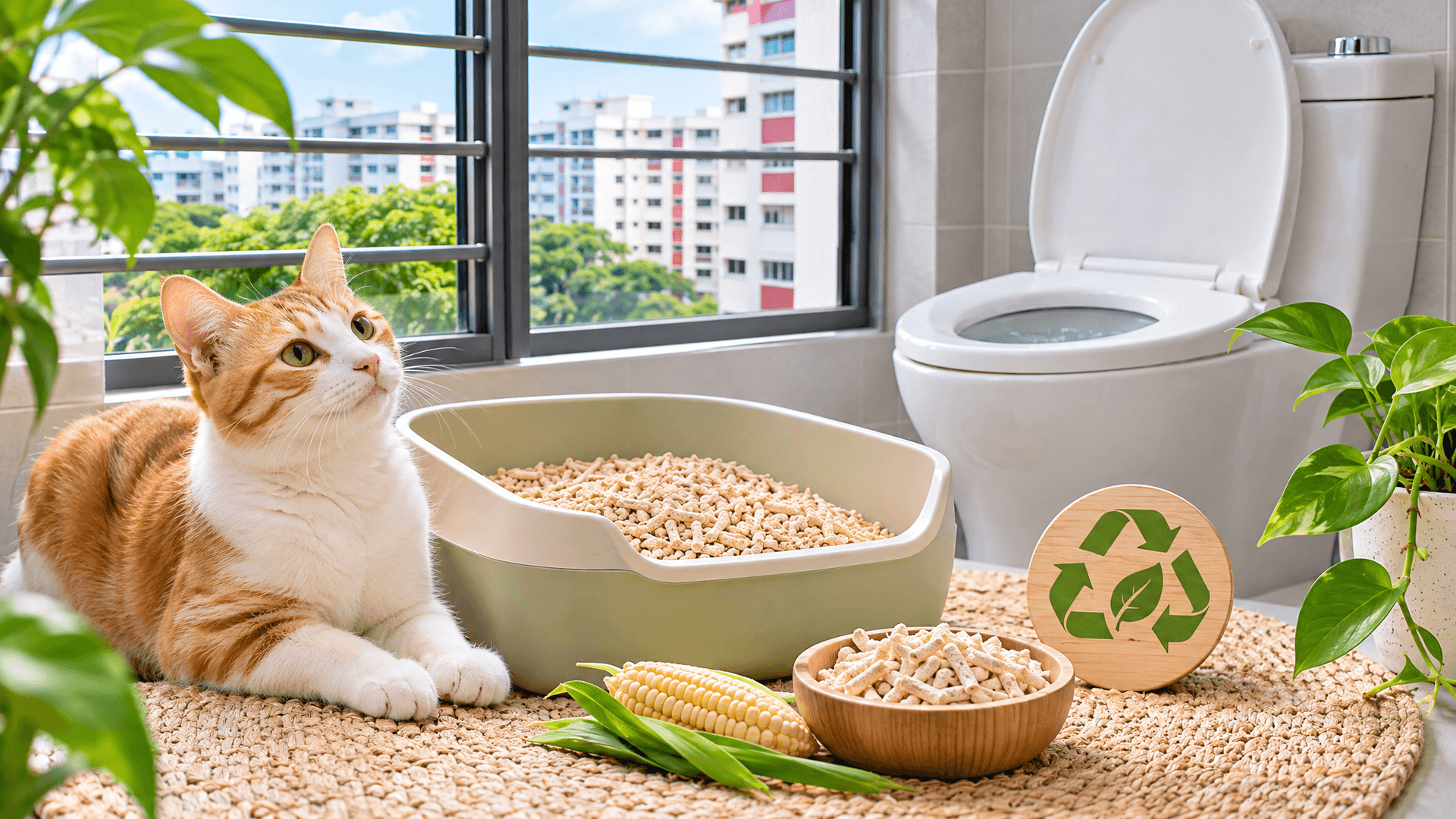
You’ve just scooped the litter tray, the toilet is two steps away, and the bag of litter says ‘biodegradable’. It feels like the neatest option, especially when the kitchen bin is already smelling a bit ripe. But if you’ve searched ‘can you flush cat litter Singapore’ hoping for a yes, here’s the practical answer: don’t flush it down your HDB toilet, even if the pack says ‘flushable’. Scoop it into a bag, seal it, and put it out with general waste according to your block’s disposal instructions.
What the label doesn’t tell you about your toilet
‘Biodegradable’ describes what can happen to a material over time under suitable conditions. It doesn’t tell you what that material will do during the few seconds it takes to flush, or whether it will move cleanly through the bends in your toilet and the pipes beyond. ‘Flushable’ is a different claim, but it still doesn’t establish that used litter is suitable for your particular toilet or your block’s plumbing. The useful question is whether the scoop will disperse quickly enough to travel through the drain, not whether its ingredients can eventually break down.
Think about what you bought the litter to do in the first place. Many plant-based granules and pellets absorb liquid, and some swell as they take it up. Clumping varieties are designed to hold together when wet, which makes them easy to lift out of the tray but doesn’t make them easy to move through a pipe. Even litter that crumbles when soaked can leave wet particles behind. If those particles collect at a bend or where a drain is already partly restricted, they can contribute to a blockage.
If you’re still typing ‘can you flush cat litter Singapore’ because yours is a light paper pellet or a small scoop of tofu litter, the same advice applies. A flush that looks normal tells you the litter has left the bowl, not that it has cleared the pipe. Nor is splitting a scoop across several flushes a reliable workaround: smaller amounts can still collect over time. In a high-rise block, where your flat’s drain connects to shared plumbing, what disappears from view isn’t necessarily the end of the story.
Bag it at the tray, not at the chute
The easiest way to keep used litter from perfuming the flat is to seal it where you scoop it. Keep a roll of small, sturdy bags beside the tray, out of your cat’s reach, and open one before you start. Lift out the clumps and droppings, tip them straight into the bag, and leave enough room at the top for a tight knot. If a bag tears, leaks, or feels too flimsy for a heavy scoop, slip it into a second bag before carrying it through the flat.
A daily scoop is a useful starting point, but let your nose and your cat’s habits set the schedule. If the tray is next to your work desk or two cats share the litter area, a quick morning scoop and another before your evening trip to the bin might suit the flat better. If the bag has to wait indoors, put it in a small, washable bin with a snug lid. Keep it away from food prep and direct sun, and don’t keep untying the same bag to add the next scoop; that defeats the point of sealing it.
Take the sealed bag to whichever general-waste point your building tells residents to use. That might be an in-flat refuse chute, a common chute on the landing, or a designated bin, depending on your block. Check the posted instructions rather than assuming the setup is the same as at your last flat. On a full tray-change day, split the used litter into manageable sealed bags if needed so they won’t tear under their own weight or be too bulky for the disposal point. Don’t tip loose litter into the chute, and don’t put it in the recycling bin just because the packaging says ‘biodegradable’.
Keep the litter corner dry and easy to clean
In a humid Singapore flat, the smell you notice at the front door might be coming from the tray rim or litter mat, not the bag you just tied. Sweep up tracked granules and put them in the general-waste bag rather than washing them into the shower drain. Wipe the scoop handle and tray rim when they get soiled, and dry the tray before refilling it after a wash. If you keep the litter box in the bathroom, move it out of the shower’s splash zone if you can; damp litter around the edges is harder to scoop neatly.
The same goes for the fresh litter. Close the original bag properly or store it in a dry, lidded container, and avoid keeping it beside a frequently wet bathroom floor. If the little holding bin still smells after you’ve emptied it, check under the lid and around the rim for stray granules or residue. Wash and dry it before putting it back by the tray. It’s a small job, and more useful than trying to cover an old litter smell with a stronger scent.
The next time ‘can you flush cat litter Singapore’ crosses your mind with a scoop in hand, make the bag the easier option. Set up the bags and lidded bin within reach so there’s no walk across the flat with a loaded scoop. Then tie the bag and take it to your block’s designated waste point on your next trip out. You’ll keep the litter corner tidier without asking your toilet to deal with something that was designed to soak up water.