

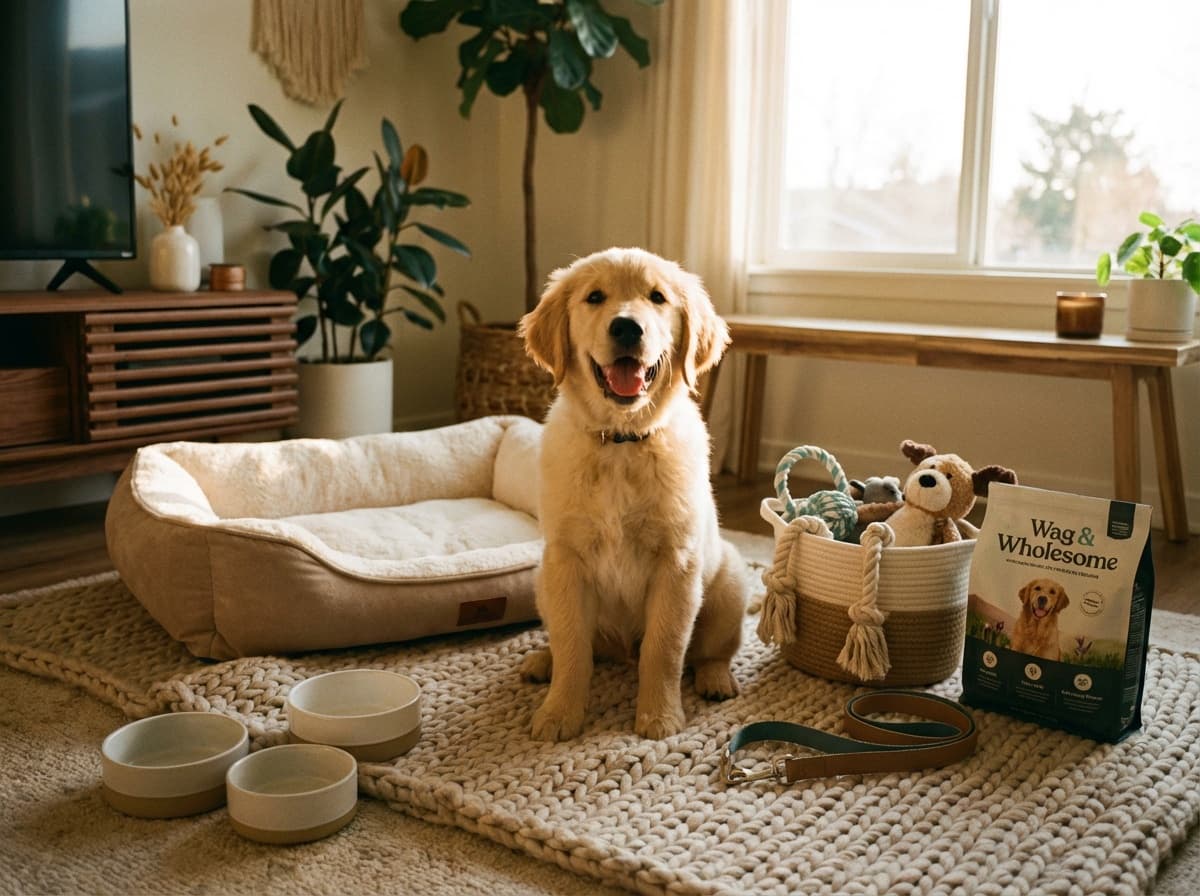
Bringing home your first dog is equal parts exciting and “wait, what did I just sign up for?” The good news is that most early stress comes from a few predictable moments: the first night, the first walk, the first accident, the first “why are you chewing that?” Plan for those and you’ll feel calmer—while your dog settles faster. Instead of aiming for a “perfect training bootcamp”, focus on trust, routines, and a home setup that makes good choices easy.
Set up your home like you’re hosting a curious toddler
Your dog doesn’t need a mountain of gear, but they do need a space that makes sense. A crate or safe pen area can be a lifesaver—not as punishment, but as a cosy “bedroom” where your dog can decompress. Set it up somewhere you spend time so they don’t feel isolated, and add soft bedding that’s easy to wash. If your dog is a chewer (many are at first), skip anything that can be shredded into strings or swallowed, and keep a couple of durable chew options in rotation so you can redirect quickly.
Before your dog arrives, do a slow walk-through at dog-eye level. Loose cables, slippers, children’s toys, and anything that smells like you (socks!) are basically invitations. Baby gates are your friend here, because blocking off problem areas is far easier than relying on willpower. This is one of those new dog owner tips that feels almost too simple, but it prevents a ton of “I turned my back for 30 seconds” moments.
Food and water placement matters more than people think. Put bowls in a low-traffic spot where your dog won’t be stepped over constantly, and if you’ve got a messy drinker, a waterproof mat saves your floors and your patience. Keep cleaning supplies handy—enzyme cleaners are especially useful for accidents because they help remove lingering smells that can draw a dog back to the same spot. When your setup supports calm, everyday habits, you’ll see better behaviour without having to constantly “manage” your dog.
Build a routine first, then worry about “perfect” training
Dogs relax when life is predictable. For your first dog, a simple daily rhythm—wake up, potty, meal, short play, rest—often does more for behaviour than a dozen complicated rules. Try to feed and walk around similar times each day, and don’t be surprised if your dog naps a lot. Settling is a skill, and rest is part of learning.
Potty training is where many new dog owner tips get overly complicated. Keep it basic: frequent opportunities, calm praise when they go in the right spot, and quiet clean-up when they don’t. If you catch an accident mid-stream, gently interrupt and take them to the correct place—no scolding, no drama. Your dog isn’t being “naughty”; they’re learning a brand-new map of your home and your expectations.
Sleep can be the toughest adjustment, especially with puppy care. The first nights are often noisy because your puppy is away from littermates for the first time, and that’s a big change. If you’re using a crate, placing it near your bed can help them feel secure, and a consistent bedtime routine (last potty break, lights down, quiet) tends to work quickly. If your dog wakes and fusses, keep night-time outings boring: leash on, potty, back to bed.
When it comes to training, start with the basics that make daily life smoother: responding to their name, coming when called, and a simple “sit” for polite greetings. Keep sessions short—think a minute or two sprinkled throughout the day—so your dog stays engaged and you don’t get frustrated. A common trap with a first dog is trying to teach everything at once, then feeling like nothing is sticking. You’ll get better results by repeating a few key skills in lots of tiny moments, like asking for a sit before you put the bowl down or before you clip the leash.
Leash walking: aim for calm, not perfect
Most dogs don’t naturally understand leashes, and that’s normal. Early on, focus on creating a positive association: clip the leash, give a treat, take a few steps, treat again. If your dog pulls, don’t turn it into a tug-of-war—pause, wait for slack, then move forward. Over time, your dog learns that pulling doesn’t get them where they want to go, but calm walking does.
Socialisation and confidence: gentle exposure beats overwhelm
People hear “socialisation” and think it means meeting everyone and everything immediately. In reality, good socialisation is about teaching your dog that the world is safe and predictable, one small experience at a time. For puppy care, that might look like watching bicycles from a distance while you offer treats, hearing a vacuum from another room, or walking on different surfaces (tile, grass, a doormat) at your dog’s pace. The goal is a dog who can cope calmly, not a dog who has been rushed through a checklist.
If your dog seems worried—tail tucked, freezing, trying to hide—create space and lower the intensity. Let them observe without pressure, and reward curiosity rather than forcing interaction. For a first dog, it helps to remember that one overwhelming experience can stick longer than five “fine” ones. When possible, choose calm, controlled introductions that leave your dog feeling safe.
Visitors can be tricky, especially in the first couple of weeks. Many dogs get excited and jump, and it’s easy to accidentally reward it with attention. A practical approach is to keep a leash on during greetings for the first week or two, ask your dog for a sit, and have your visitor greet only when paws are on the floor. If your dog struggles, give them something else to do—sniffing for scattered treats on the floor is a great “job” that keeps their brain busy and their body grounded.
Chewing and mouthing are also normal, particularly with puppies. Keep a chew within reach in every room you hang out in so you can redirect quickly. When teeth land on your hand, swap your hand for the chew and praise when they take it. You’re not just stopping a behaviour—you’re teaching what to do instead, which is the heart of the best new dog owner tips.
Health, grooming, and the “stuff” that keeps life smooth
A relationship with a veterinarian is part of responsible ownership, particularly with a first dog, because you’ll have questions you didn’t know to ask. Book an initial check-up, talk through vaccines and parasite prevention appropriate for your area, and ask what signs should prompt a call. If anything seems off—appetite changes, repeated vomiting, ongoing diarrhoea, sudden lethargy, trouble breathing, or pain—contact a professional promptly. It’s always better to ask early than to wait and worry.
Grooming isn’t just about looking cute; it’s about comfort and early detection of issues. Get your dog used to gentle handling from day one: touch paws, lift ears, look at teeth, and reward calmly. Even if your dog won’t need frequent haircuts, brushing helps reduce shedding and mats, and it’s a perfect low-pressure bonding activity. Nail trims are easier when you start slowly—one nail, a treat, done—rather than trying to wrestle through all of them at once.
Hot weather and cold weather both change what “normal” looks like. In hot weather, prioritise shade, fresh water, and shorter walks during the warmest parts of the day; watch for heavy panting or reluctance to move and head indoors if your dog seems uncomfortable. In cold weather, some dogs do fine while others need a coat, especially small, short-haired, or older dogs. Whatever the climate, keep walks about quality, not distance—sniffing and exploring is enriching even on a short route.
Food is another area where first-timers get overwhelmed. Choose a complete, life-stage-appropriate diet, keep treats as a small part of the overall intake, and avoid sudden changes that can upset digestion. If you do need to switch foods, do it gradually and check with your veterinarian if your dog has a sensitive stomach. Don’t underestimate the power of enrichment feeding either: puzzle feeders, snuffle mats, or simply scattering kibble in a safe area can turn mealtime into a calming, brain-boosting activity.
Microchipping and registration: a simple step that can save your dog
Even the most careful owners have a door slip open or a lead clip fail, especially during the early adjustment period. Microchipping gives your dog a permanent form of identification, and registration links that chip to your current contact details so you can be reached quickly if your dog is found. Ask your vet to scan the chip at your first visit to confirm it’s working and that the number matches your paperwork. Most importantly, keep your details up to date if you move house or change phone numbers—an unregistered chip can’t do its job.
If you take one thing from this guide, let it be this: your dog doesn’t need you to be perfect—they need you to be consistent. The best new dog owner tips are the ones that make daily life predictable and kind: a safe space, a steady routine, gentle training, and plenty of chances to sniff, rest, and feel secure. If you’re stocking up on the basics—crate or pen essentials, durable chews, enzyme cleaner, grooming tools, and enrichment feeders—visit Global Pet Company’s website for reliable pet supplies that make those first weeks easier.