
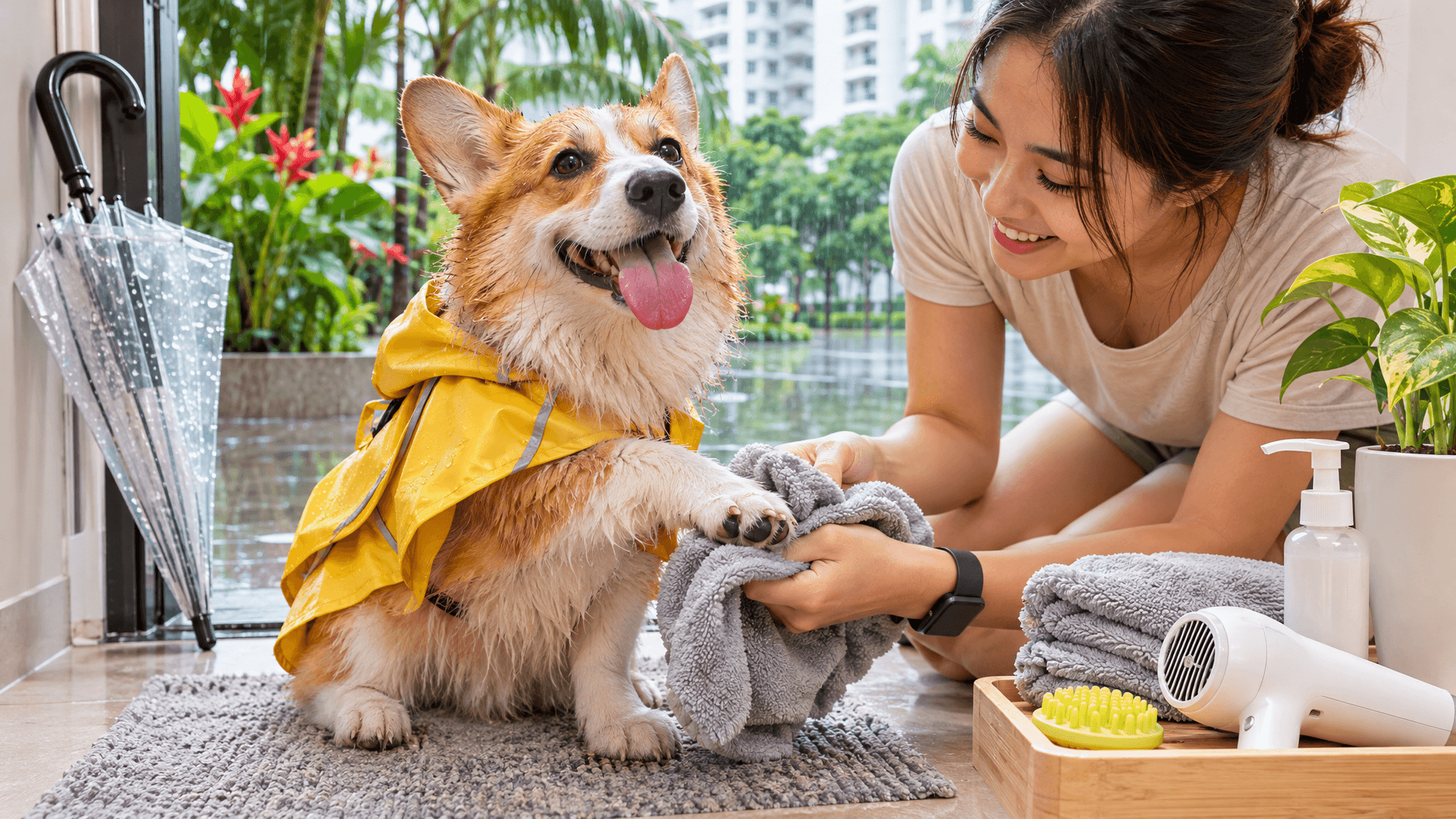
By the time you’ve taken the lift back to your flat, your dog may have stopped leaving wet footprints. That doesn’t mean their paws are dry. The fur between the toes can still feel damp, especially after a walk through wet grass or a dash across a puddled car park. If you’re wondering how to dry dog paws after rain, the trick is to spend less time wiping the outside of each paw and a little more time blotting the spots the towel usually skips.
Set up a paw stop just inside the door
Keep a small, absorbent cloth within arm’s reach of the door, along with a non-slip mat your dog can stand on. A soft microfibre cloth or a thin cotton hand towel works well: both are easier to fold into a narrow edge than a thick bath towel. In a humid Singapore flat, the towel from the morning walk may still be damp when the evening shower rolls in. Keep a clean spare handy and hang the used one open where air can circulate, rather than leaving it bunched up by the shoe rack.
Get the cloth ready before you unclip the lead if your dog tends to make straight for the sofa. Invite them onto the mat and let them settle, then start with whichever paw they’re happiest for you to touch. If they lean away, put the paw down instead of gripping it more tightly; the next attempt can be as simple as touching the leg, offering a small treat and stopping there. A routine your dog willingly comes back for is more useful than a perfect four-paw wipe that turns into a wrestling match.
Blot between the toes instead of rubbing
Start by pressing the cloth against the pads and around the outside of the paw to pick up the obvious wetness. Support the paw close to the mat, without pulling the leg sideways or lifting it higher than your dog finds comfortable. With your fingers, ease two toes apart just enough to see the gap, then touch a folded edge of the cloth to the damp fur and skin. Hold it there briefly to absorb the moisture, lift it away and move to a dry part of the cloth for the next gap. There’s no need to thread the cloth through the toes or scrub back and forth.
The underside is easy to miss, particularly the little spaces where the toes meet the pads. On a fluffy paw, the surface fur can feel dry while the fur closer to the skin is still damp, so part it gently with a fingertip before blotting. If your dog pulls back every time you reach a particular spot, don’t keep trying to get at it from a different angle. Set the paw down and take a look without forcing the toes apart; a spot that seems sore deserves a different response from a paw that’s simply wet.
For an ordinary shower, there’s no need to rinse clean paws or turn the doorway stop into a bath. If you can see grit between the toes after a muddy shortcut, use a little clean water to rinse it away rather than grinding it around with the towel. Then blot again, using a fresh cloth if the first one is already wet or dirty. That distinction is the heart of learning how to dry dog paws after rain: clean off what you can see, but don’t add water when all you need to do is remove it.
Check the skin, not just the footprints
Before you let your dog off the mat, part the fur in one of the gaps you’ve just dried and lightly touch the skin with a clean, dry fingertip. If you’re unsure whether it’s still damp, press a fresh corner of the cloth against it and see whether the fabric picks up moisture. Check the other gaps as you go, including on the back paws, which are easy to rush once your dog has spotted dinner. If the cloth comes away damp, switch to a dry section and blot once more rather than rubbing harder.
Skip hot airflow, even if you’re tempted to reach for the hair dryer after the third downpour of the day. A blast aimed between the toes can feel too hot at close range, and the noise can make a paw-shy dog even less willing to stand still. If the fur still feels damp after blotting, let your dog settle on a dry mat in a room with normal air circulation, then check again after you’ve put away the lead. A second dry cloth is usually more useful than a louder, fussier routine.
Know when to put the towel down
The best answer to how to dry dog paws after rain is usually a cloth and a gentle touch, but some changes call for a vet rather than another wipe. Arrange a veterinary assessment if you notice redness that persists, swelling, broken skin, discharge, an unusual smell that doesn’t go away once the paw is dry, or repeated licking or chewing of the same spot. Limping, reluctance to put weight on a paw, or a clear pain response when you touch it are also reasons to stop and contact your vet promptly. Don’t dig between the toes to investigate or keep washing in the hope that the problem will go away.
On an uneventful day, the whole routine can fit into the time it takes to get your shoes off: onto the mat, a gentle blot between the toes, a quick dry check, then off to the sofa. If your dog is still getting used to paw handling, practise for a few seconds on dry days too, so a towel at the door doesn’t always mean a long inspection. The next time a shower catches you halfway around the block, you’ll have a clean cloth ready and know exactly where to look.